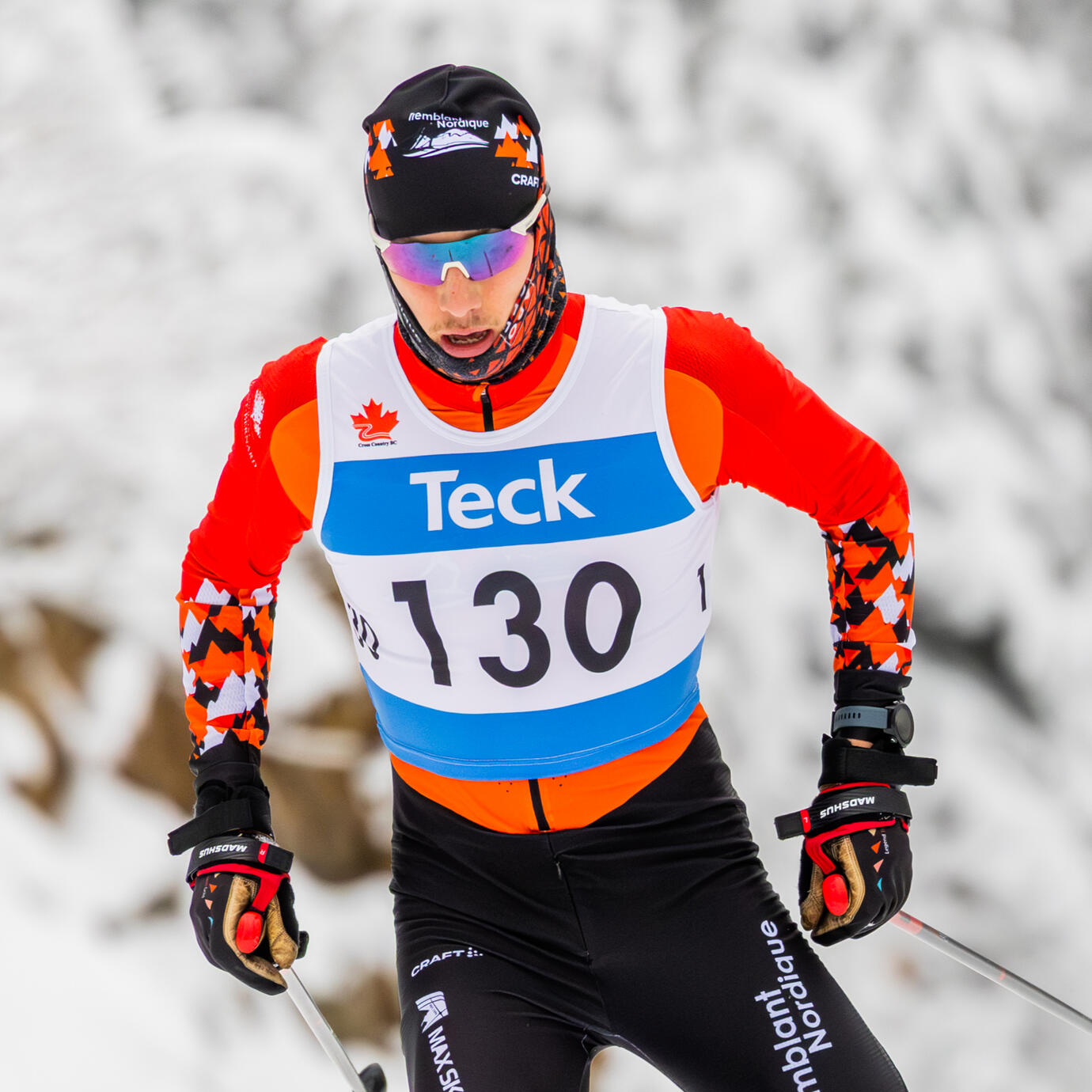
Parker Courte-Rathwell
High Performance Ski Bum
Domestic Race Calendar
SOVEREIGN LAKE (BC) Nov 28-30
7.5km skate individual: P.16
Skate sprint qualifier/heats: P.4 / P.7
10km classic individual: P.8SOVEREIGN LAKE (BC) Dec 14-16
Olympic Trials
10km classic individual: P.25
10km skate individual: P.20
Skate sprint qualifier/heats: P.18/P.18LAKE PLACID (NY) Jan 4-9
US Senior nationals
10km classic individual: P.49
Skate Sprint qualifier/heats: P.37
20km skate mass start: P.28
Classic sprint qualifier/heats: P.24/19CANMORE (AB) Jan 29 - Feb 1
Western Canadian Nationals and U23/Jr World championship Trials
10km classic individual: P.37
Skate Sprint qualifier/heats: P.18/12
20km skate mass start: P.18GATINEAU (QC) Feb 6-8
Eastern Canadian Nationals
Skate Sprint qualifier/heats: P. 5/5
10km skate individual: P.7
10km classic mass start: P.5MINNEAPOLIS (MN) Feb 14-15
US Super Tour
10km classic mass start: P.18
10km skate individual: P.8CABLE (WI) Feb 21
US Birkie
50km skate mass start: P.16MONT-SAINTE-ANNE (QC) Mar 9-14
Canadian National ChampionshipsCRAFTSBURY (VT) Mar 27-29
US Super Tour finals and Spring nationals
Season Updates
Use the following buttons to read up the adventure thus far.
Livestreams
When made available, I will share livestream links to the races.
US NATIONALS LAKE PLACID LIVE STREAM
This link will bring you to the youtube page, where the most recent livestream replay will be available, or shown as a live video
Results
All results from major races throughout the year will be published to my FIS profile.Local timing companies will typically get results out faster and offer live results. For the Canadian races, Zone4 is the place to go. The American stops will vary.
Equipment Sponsers
Goals and qualifying procedures
Representing the country on the international scene has been my objective since I started racing. Throughout the racing season, the world cup has different periods. Before the beginning of each period, the national body (Nordiq Canada) will select the domestic cup point leaders to join the world cup team. This is why we have a domestic circuit throughout the year, where we can cumulate points. This season, the world cup team will be qualified through the Olympic Trials in Prince George Sovereign Lake (Dec 14-16).The domestic race calendar listed previously is a combination of races in both the American AND Canadian circuits. I will be competing in both as there are gaps in both schedules, as well as more competitive races in either or country on a given weekend.At the end of the year, world cup finals will be held in Lake Placid (NY). When the world cup is in North-America, both Canada and the USA are entitled to bigger teams as more of their athletes can take the starting line. For this event, the cumulative FIS point list will be considered for filling the spots available after the world cup team. There are spots for 12 athletes to race as opposed to the regular 5 spots.The following list is comprised of the international trips that I can attempt to qualify for during this season.
World Cup P2/P3
Olympic Games
World Cup P4 Europe
World Cup P4 North-America
World Cup P1 2026-2027
Want to stay updated? Join the email list.
The Gold (snow) Rush
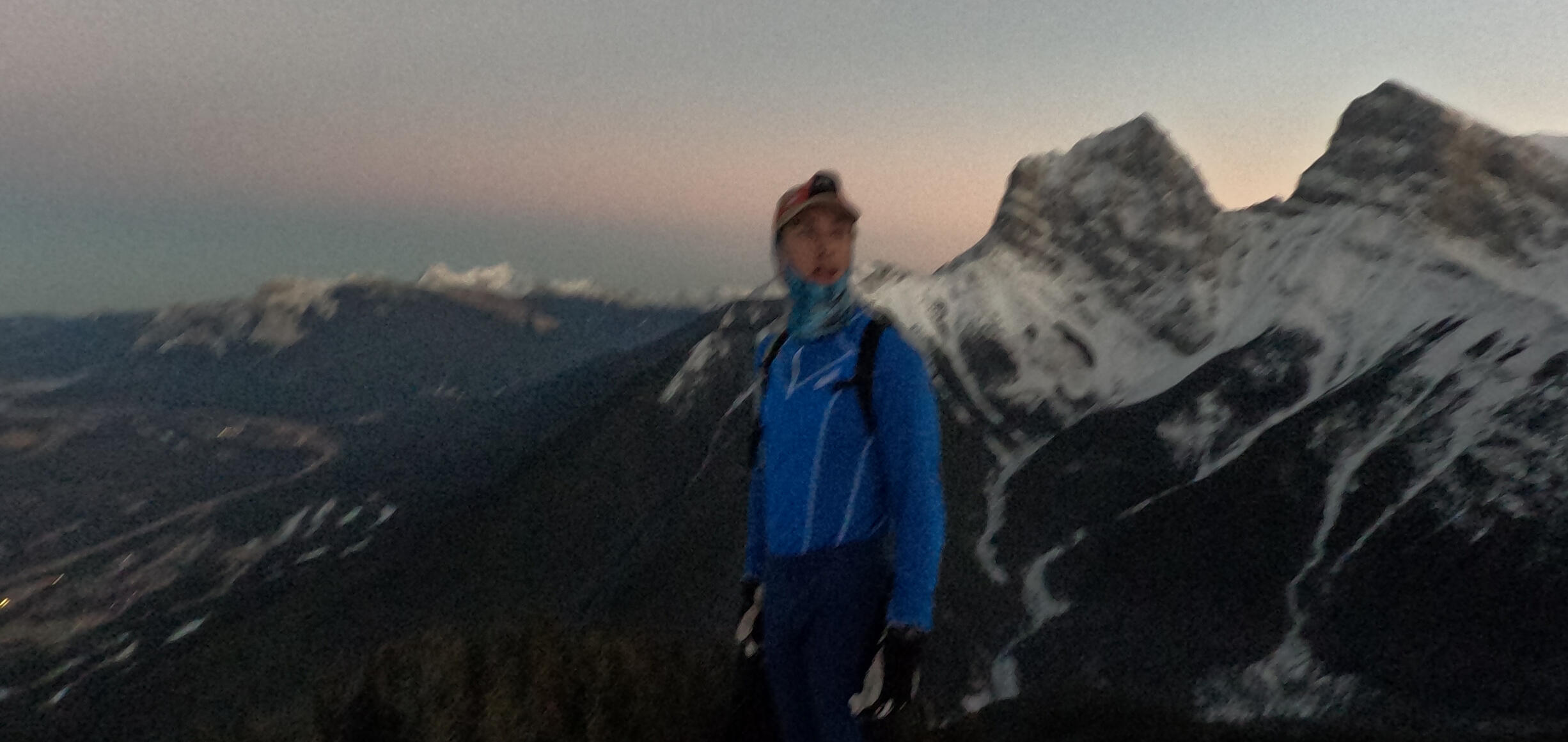
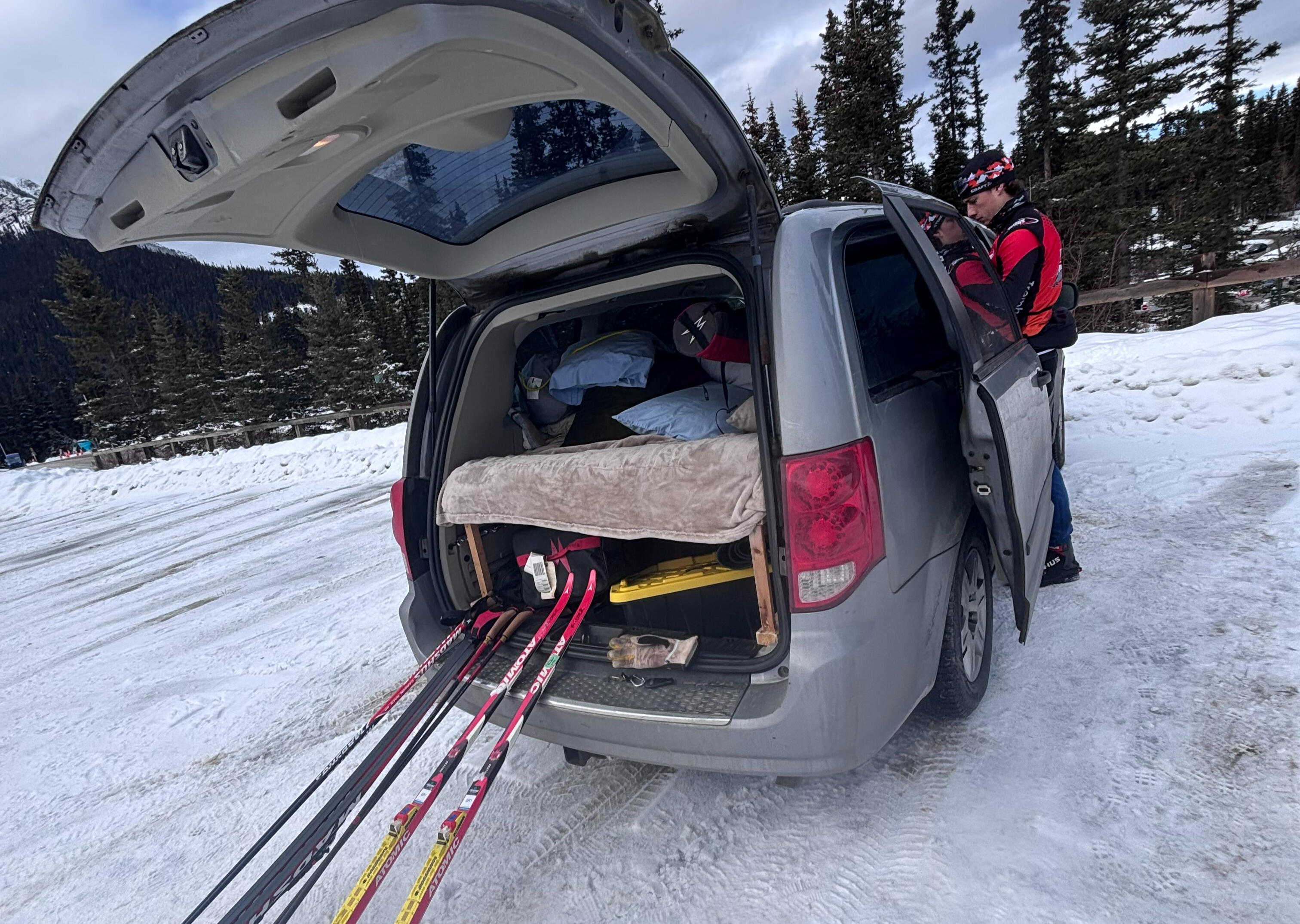
The first week of November was spent outfitting the Silver Bullet (My newly acquired 2013 Dodge Grand Caravan) and resting up after some sickness. Come the second week of November, we were on our way west to start the season on snow. After five days of driving (with one day spent in Houghton, Michigan, Go Huskies!), and several nights spent in Walmart parking lots, we arrived in Canmore, Alberta. Despite the strong snow precipitations on the east coast, I was met with a surprising situation: There was little to no snow for cross-country skiing in western Canada.
Fortunately, Lake Louise had seen some snow fall, and my first week of training out west consisted of hikes in Canmore and skiing in Lake Louise. After 8 days, I was back on the road towards Silver Star, where snow was at a record low. I met up with some old teammates of mine and spent the week doing the best we could with the conditions.
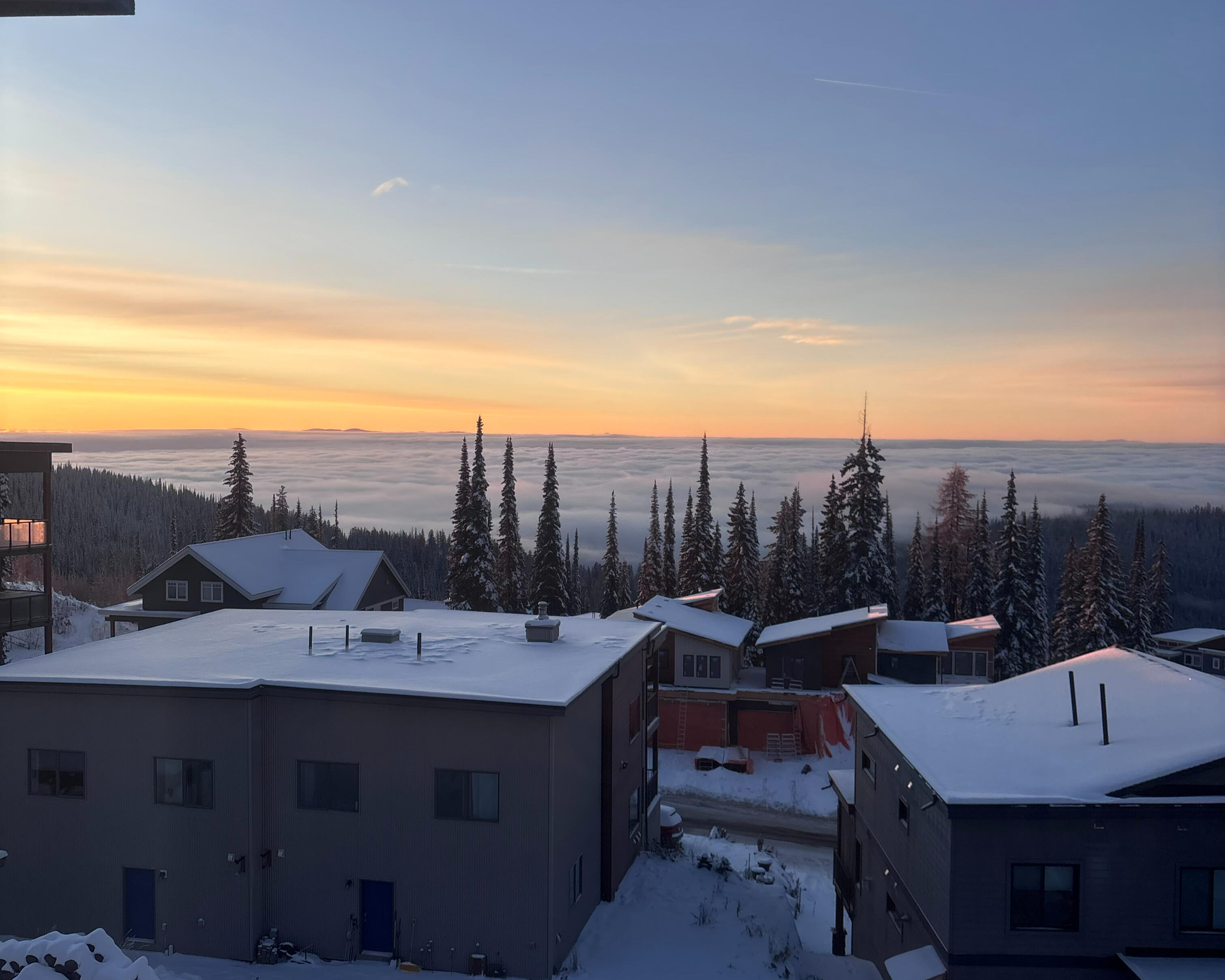
The first race weekend of the season had unfortunately been modified to a Tier 3 event. What that meant for Senior athletes was that the races weren't going to count towards any qualification purposes, nor were any points going to be awarded. The race committee at Sovereign Lake did an incredible job of providing a 2.5km loop for the weekend, where we raced three events. Several senior athletes opted out from racing, but a good show of us still went to the start line all three days.
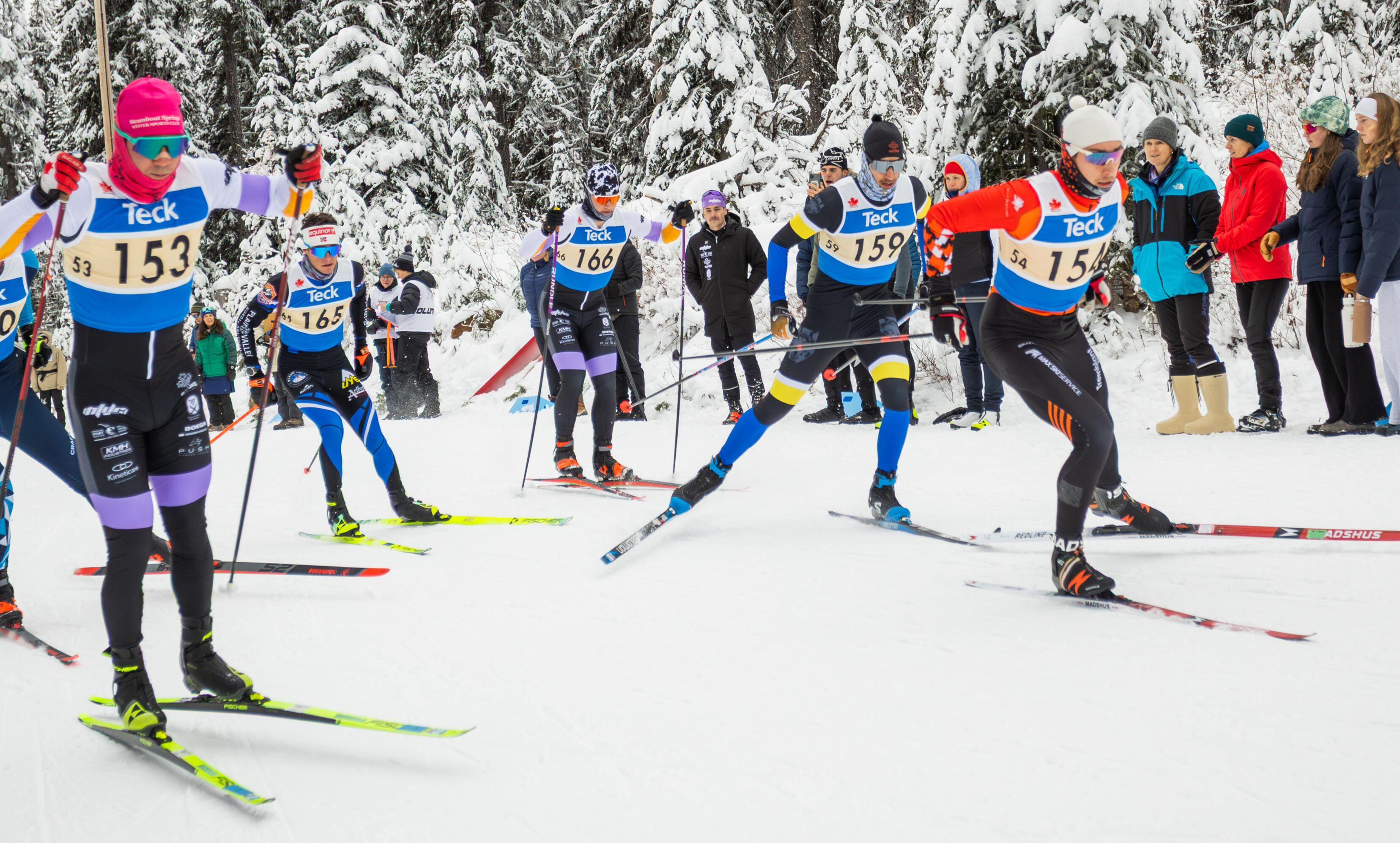
Due to the low snow in the general western area, the national body decided to move the Olympic trials from Prince George to Sovereign Lake, the location of the first weekend of racing. This required a few logistical adjustments on my end, as the races were now going to be at altitude, and in a different location than originally planned for. After spending a few days in Kelowna getting good rest, I decided to go further south to a small area that was reportedly getting a ton of snow and had a great base already setting up.
About a 40 minute drive from Penticton BC, Nickle Plate Nordic is at 1800m of elevation, and neighbors (actually 6km away from) Apex, an alpine ski resort. With a small AirBnB rental as basecamp for 7 days, I found myself skiing at a center that I now list amongst my favorite places to ski. Oddly enough, there was a new ''problem'' at Nickle Plate, they were getting too much snow! With some mechanical issues on the grooming equipment, every day was a new powder day spent breaking tracks or flopping over into the snow banks as you missed the corner of the trail due to the non-stop attack of fresh flakes pouring out of the sky and into your eyes. Nonetheless, the staff were able to pass over the trails most days, but the deck was definitely soft. This called for a lot of flexibility in my planned sessions, but the work got done.
Now with the end of the stay at Nickle Plate nearing, I'll be making my way back to Sovereign lake for Olympic trials. A few athletes and I pooled together and found some accommodations close to the race trails. The races start on December 14th, and end on the 16th. Starting with a 10km classic, and then followed by a 10km skate on Monday, both individual start events have the heaviest weight on trip selection. The final day, December 16th, will be a skate sprint. All races will be happening during the early afternoon, meaning beginning of the evening for EST. You can use the Zone4 link on the home page to follow the live results. No streaming will be provided for the races.
During this first block of travel, I've been incredibly fortunate to have had a roof to stay under in Canmore, Silver Star and Kelowna with the families of friends. I've learned a lot about living out of the van in the short duration I've used it, and it'll need a bit of work for me to be truly independent. As of now, its a perfect rig for transporting all of my stuff, and for sleeping in.Now everything is focused on trials, where I'll get to go head-to-head with all the best skiers in the country. Let's dance m*********ers!
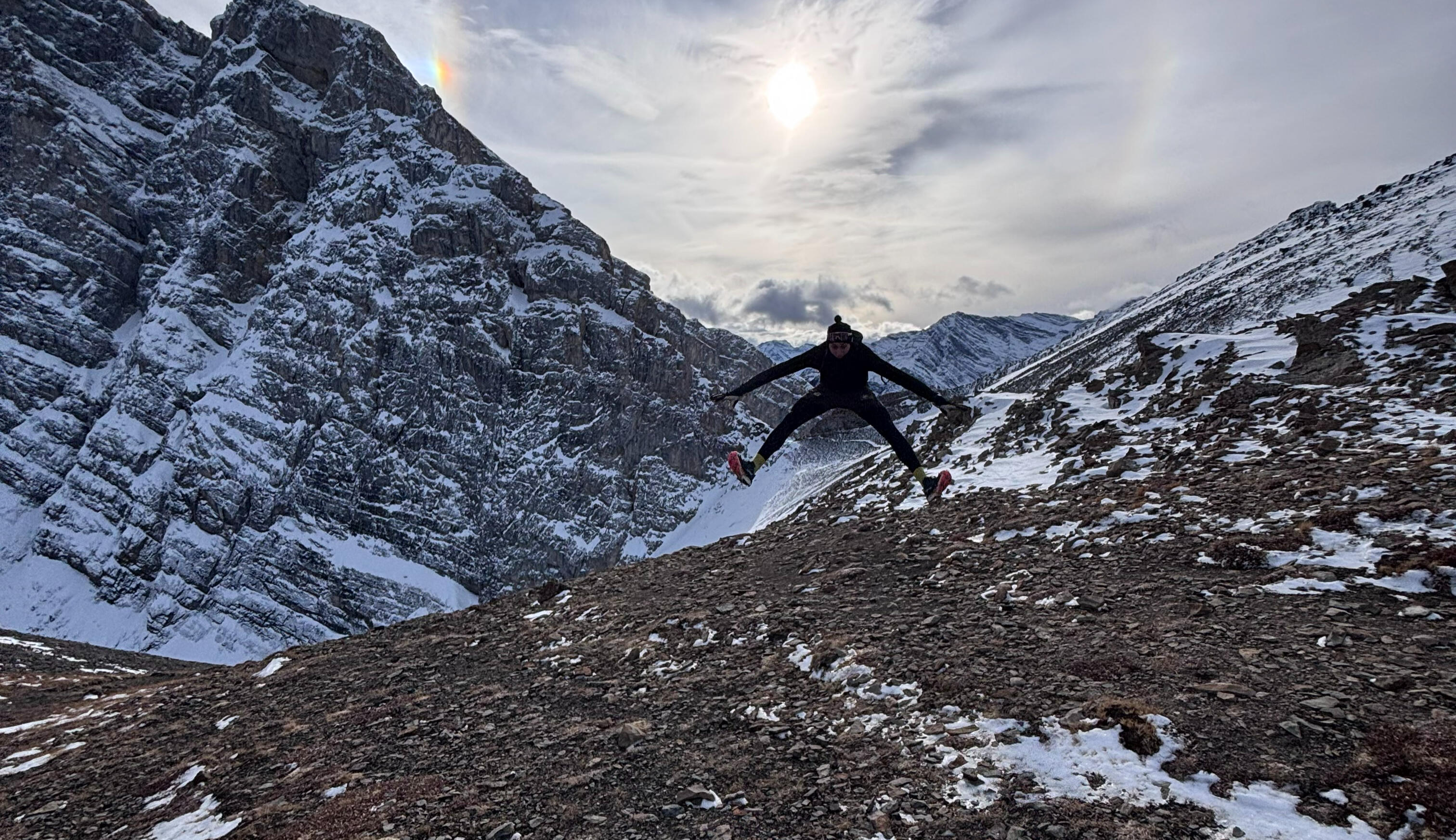
Olympic Trials
You win, or you learn. Trials was a case of both accomplishment and learning.I came into trials with a few unanticipated adjustments. The biggest adjustment was managing pain I had developed in my right foot from my boots. This called for a great amount of flexibility in my preparation, as I had to take every day individually in order to arrive at the races in a good place. This was a good reminder that to be well prepared, you must plan knowing that your plan will not go to plan.
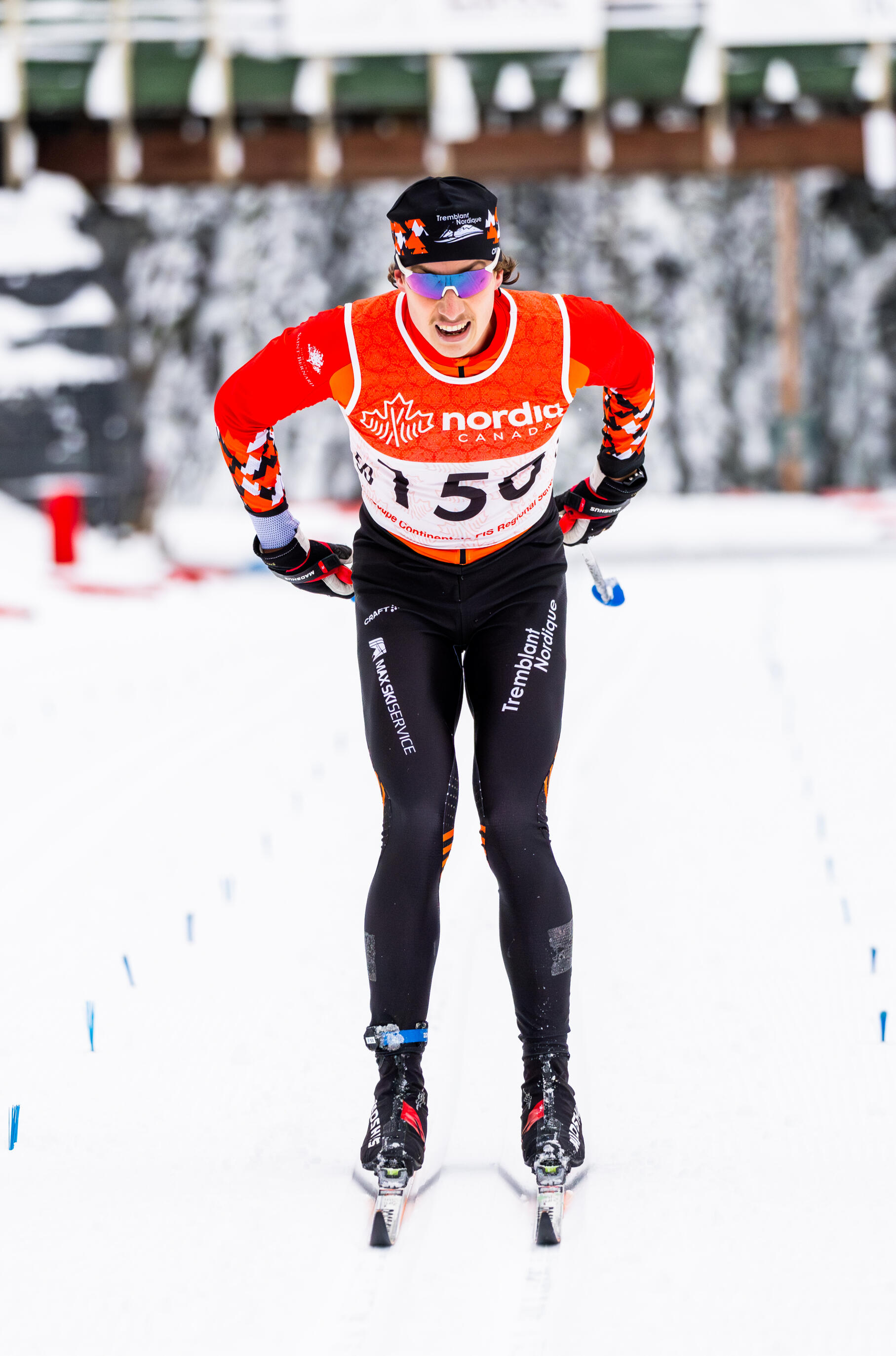
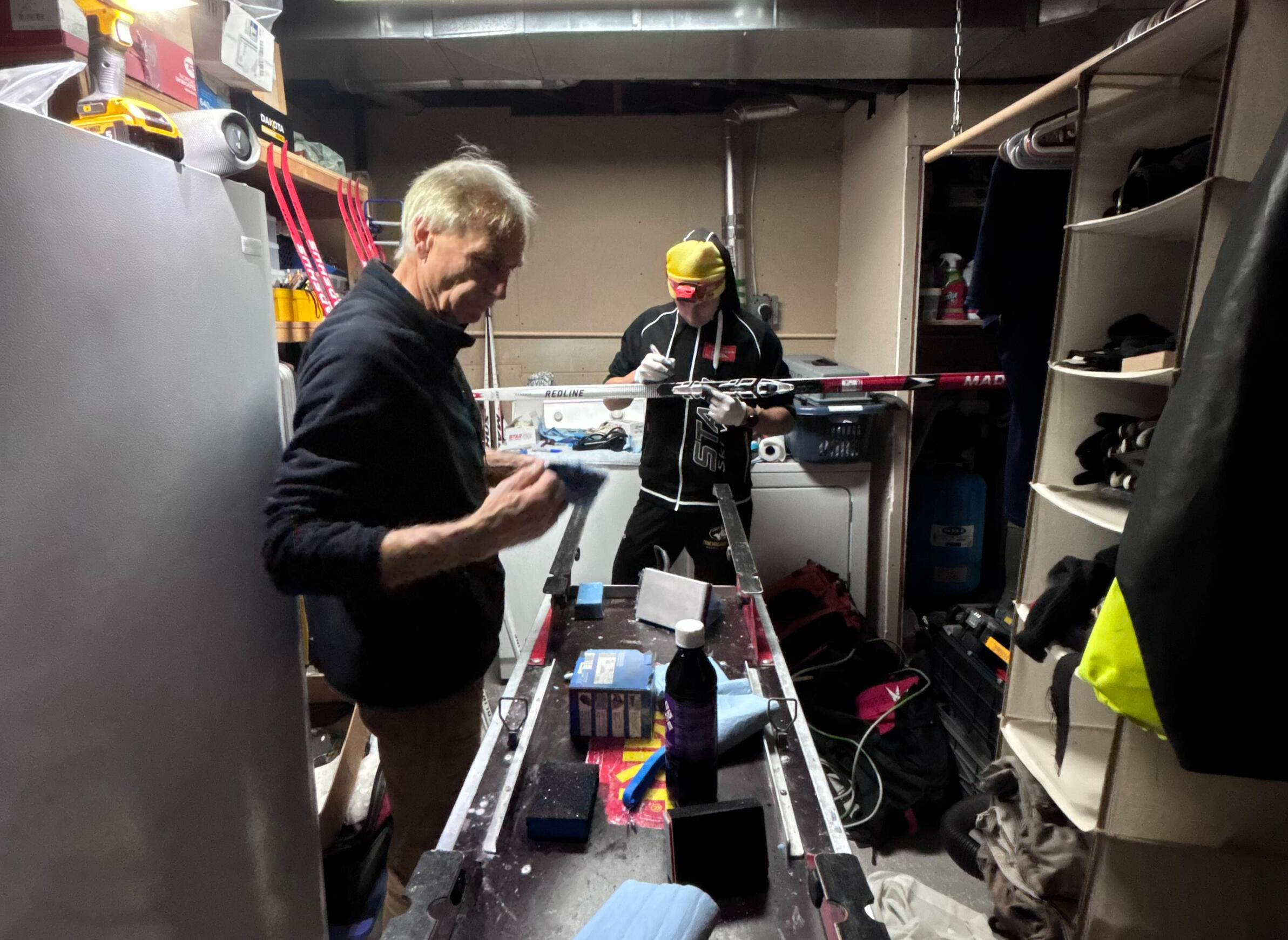
The conditions were tough as they get for waxing. The weather would fluctuate on the hour, every hour, and the trails were consistently changing. Not to mention the snow varied within the racing loop. In my sport, part of the art of winning is having fast skis. As you could imagine, varying conditions for both temperature and snow makes for difficult calls of judgement for the wax team. Within the systems and years of experience that go into preparing the best ski, luck is also involved. As it played out, I was handed the short stick. I've contemplated long and hard on the reality of this variable. The most valuable thing I can do for myself is to be educated on the things I can control, so that when luck is in my favor, I'm not leaving the things I can be prepared for, up to luck.It is important to note that this part of skiing is frustrating. I have a 100% percent conviction that in every race I've taken the start of, I'm skiing on the fastest wax and ski that the team could've found that day. Sometimes, others will have found something that in comparison is either the same, faster, or slower. In the same train of thought, the relationship between the support staff and the athlete here is critical. Without a shared enthusiasm or motivation to get the most out of the skis, even the fastest prepared ski would be slow. I was fortunate to have found a team that took myself and other individual athletes under their wing and supported us throughout the races, and for that I am fortunate and grateful.
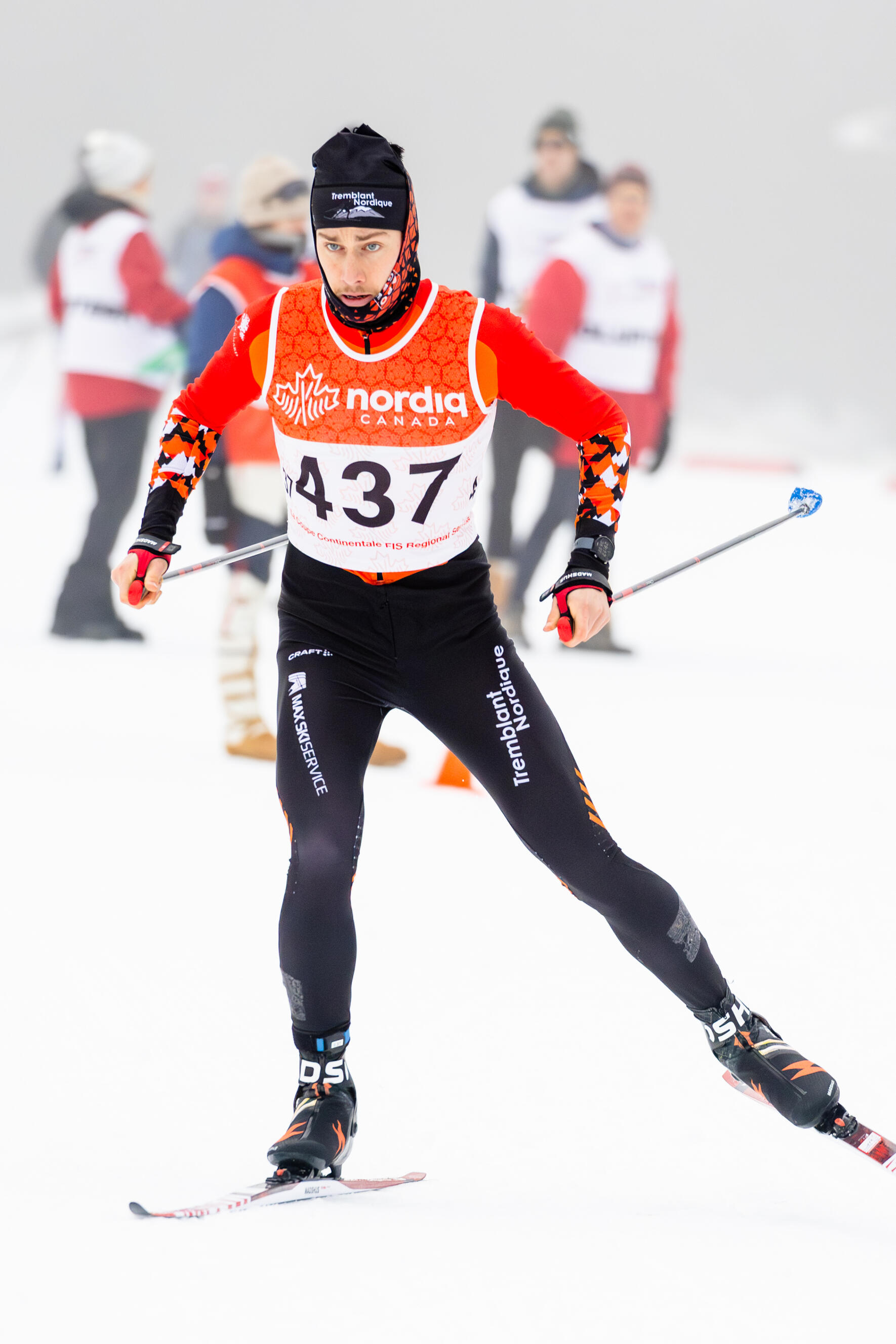
My general perception about the week of racing was that I felt flat, or deflated. Nordic skiing is a power endurance sport, in which you need to be on the attack. You need to own the course, and not the other way around. I felt like I struggled to be on the attack, and got tossed around a bit (not nearly as much as I used to though, big improvements here). This summer and fall I spent a lot of time working on delivering consistent efforts no matter how tired or sore I felt. Evidently this paid off. However, feeling flat and fatigued are different things. I have my fair share of notes I've brought back with me on how I can be better prepared for racing.
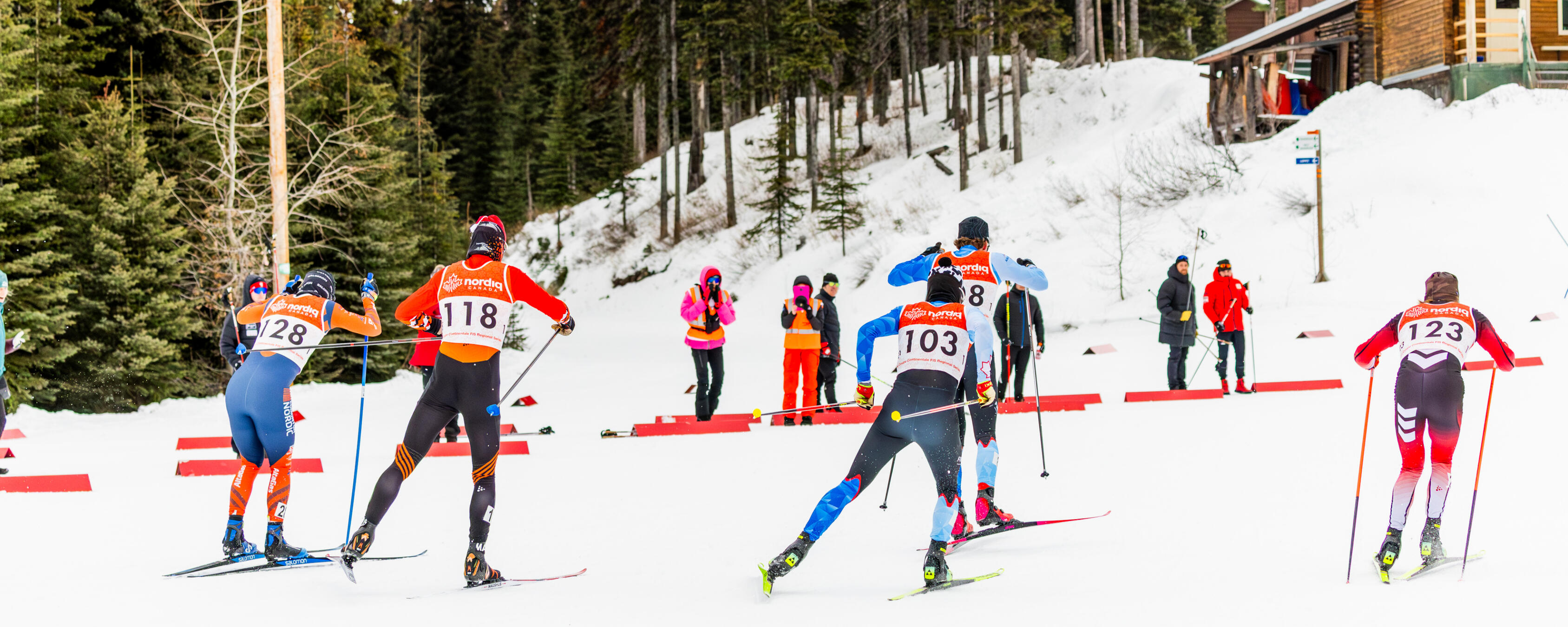
Olympic trials proved that I've progressed as an athlete. Over the past few years I've been steadily inconsistent. However over the week, I was the most consistent I have ever been. In reality, this was probably one of my most competitive showings of my career because of my consistency. However, the fact that I wasn't higher up in the list leaves me hungry.
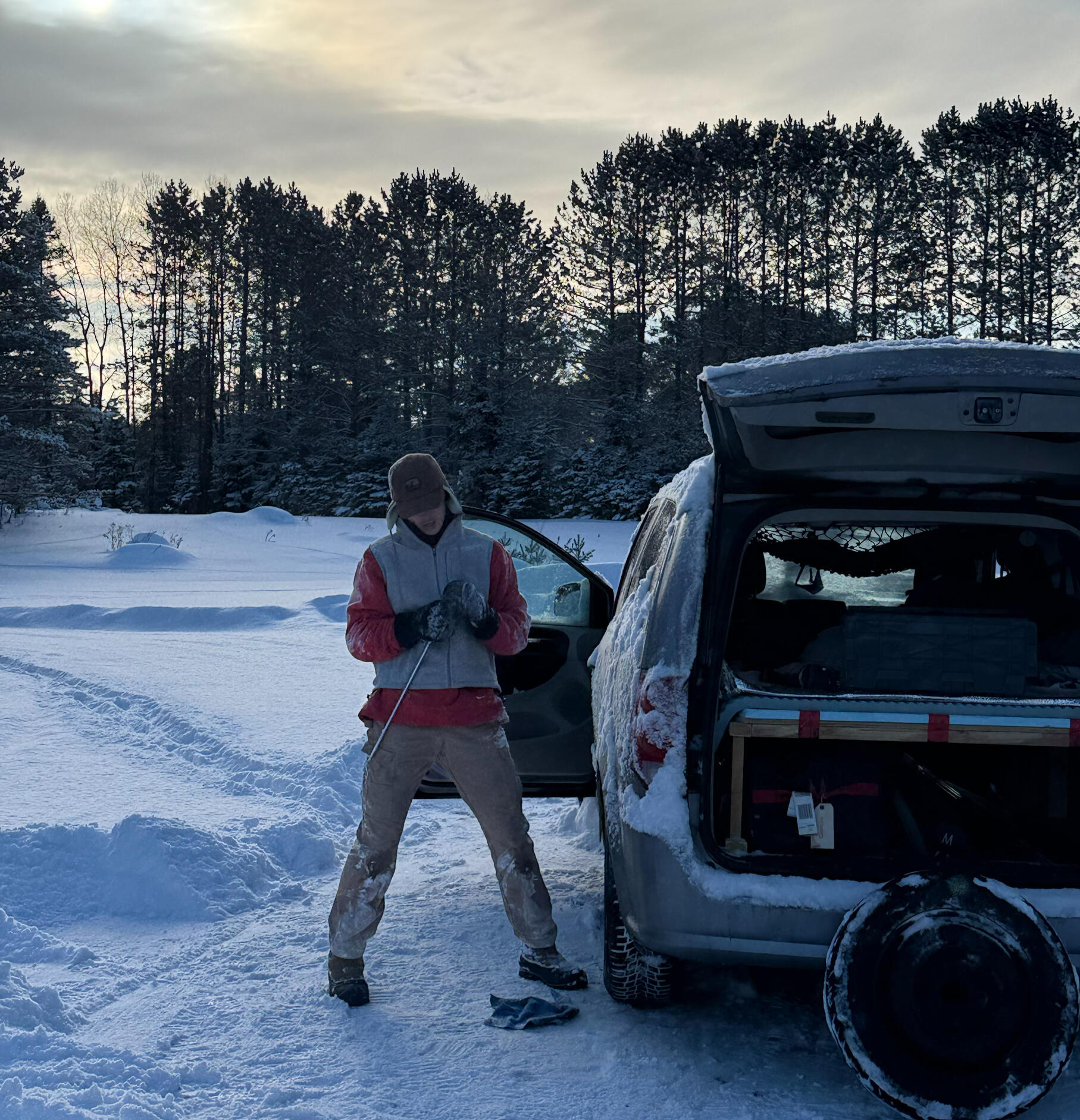
The adventure didn't end for me there though, as there was still a drive back across the country that laid ahead. Observing bison through Roosevelt national park, and sleeping in the car at -22C (-30C with windchill) in northern Minnesota were the biggest highlights. Thankfully, I managed to only get a flat tire on my first day back home, only a few minutes away from the door.
A huge thank you goes out to everyone sending encourgements and rooting for me as I continue on this season. I've been rewarded with an amazing support community after spending many hours in Tremblant this summer, and have also found many stronghold supporters throughout the continent as I chased down the snow. I wish everyone a happy new year. Smile a little wider, laugh a little louder and dance a little crazier!
Next up, US Senior nationals at Lake Placid from January 4th to the 9th. Let's dance m***********s!
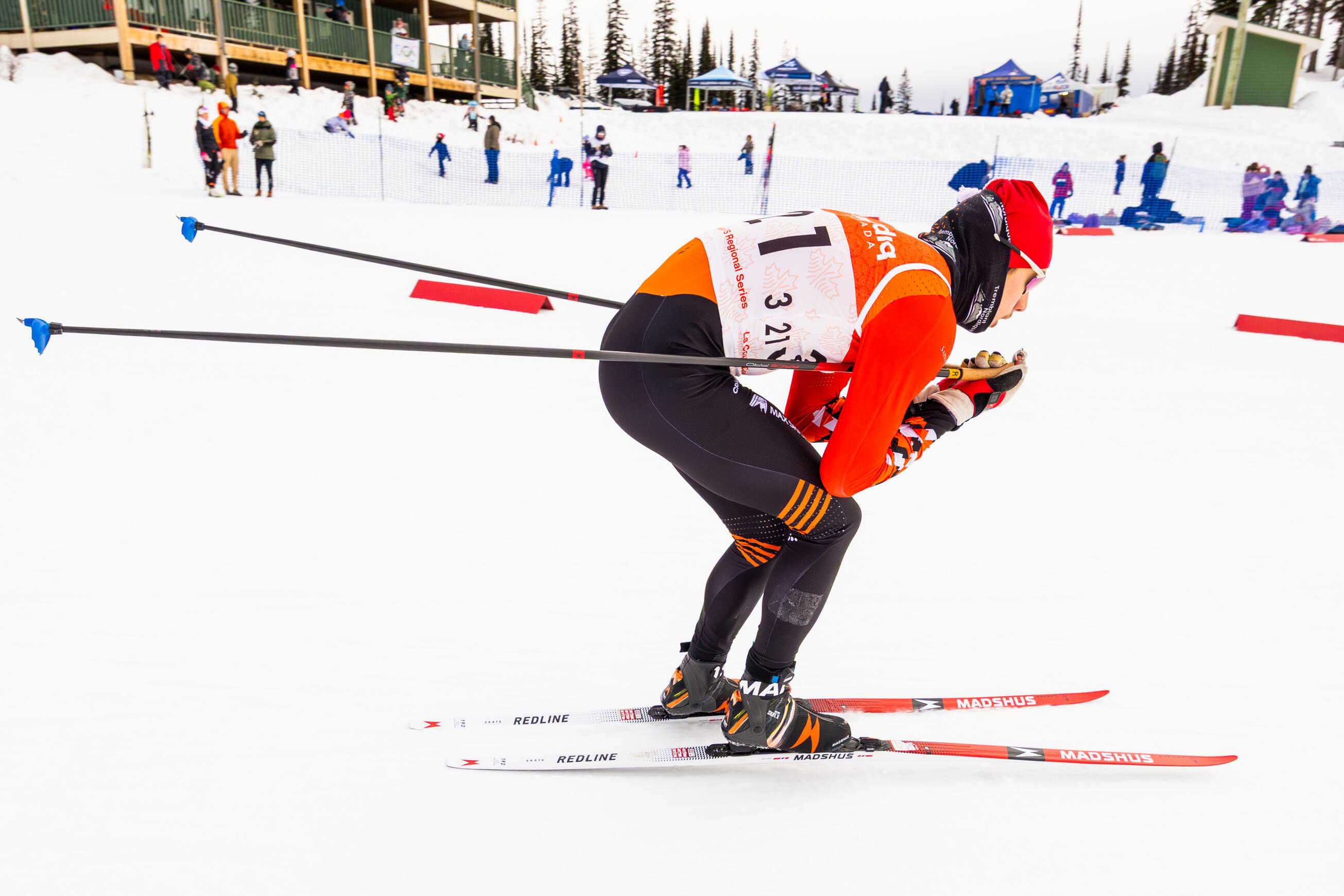
Photo credits: Vanessa Garrison [email protected]
US nationals
US nationals is consistently an incredible week of racing. Domestically, it is the deepest race field of the year. College athletes, the domestic pros, and the fastest juniors all come together to lay it all out there. The collegiate scene brings in many international athletes, and if you go through the result lists, you'll find a whole bunch of European and Scandinavian flags. To add to all the hype, this was also the last chance for the Americans to qualify for the few places left on their Olympic teams. Lastly, this was the biggest US nationals by participation ever, and it was also the deepest field of racers ever. No biggie.
After four years of competing in the US, this would be my first time racing the national championships without sporting the Husky black and gold. However, what was to become an entire week of personal bests, felt more like a reunion with friends from all over.
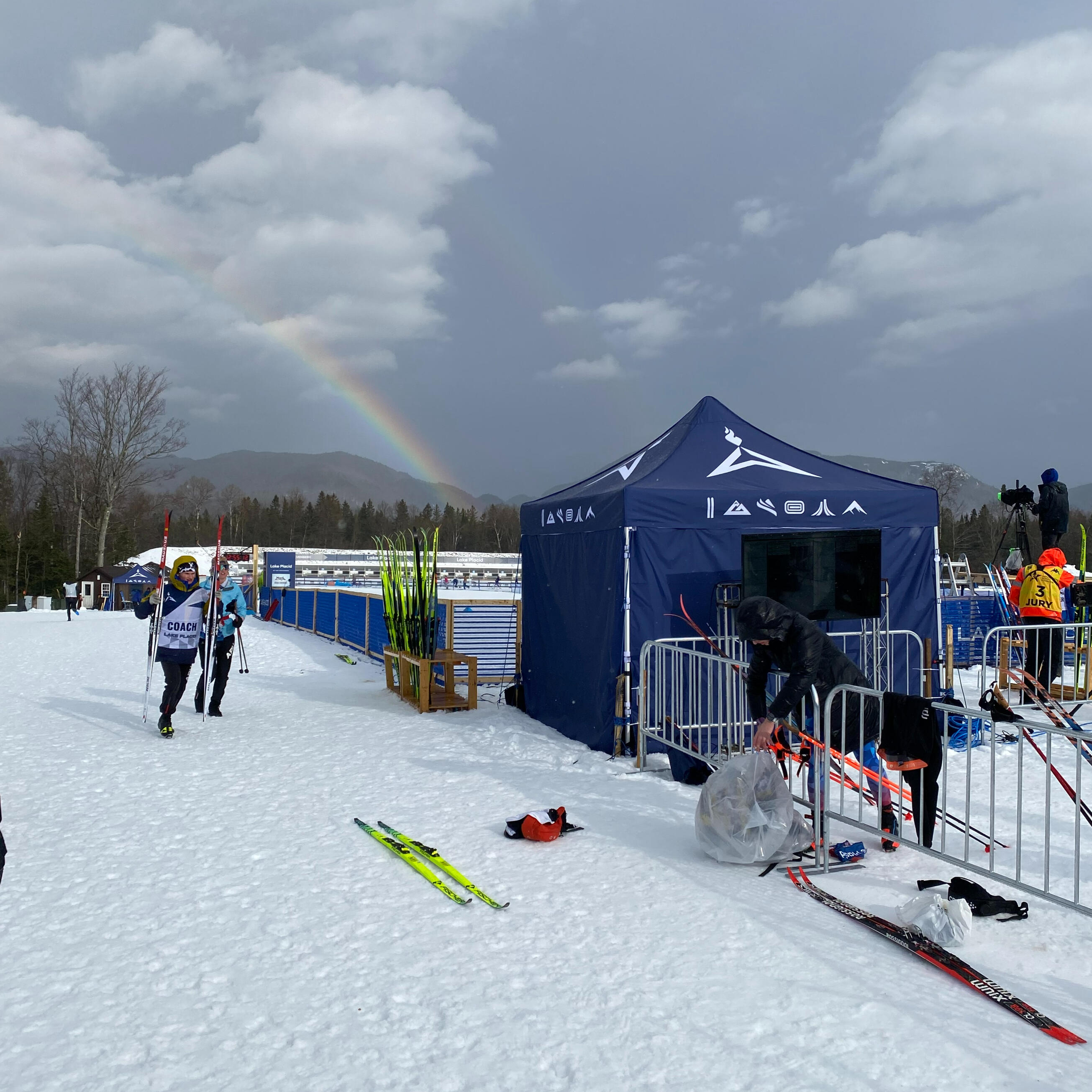
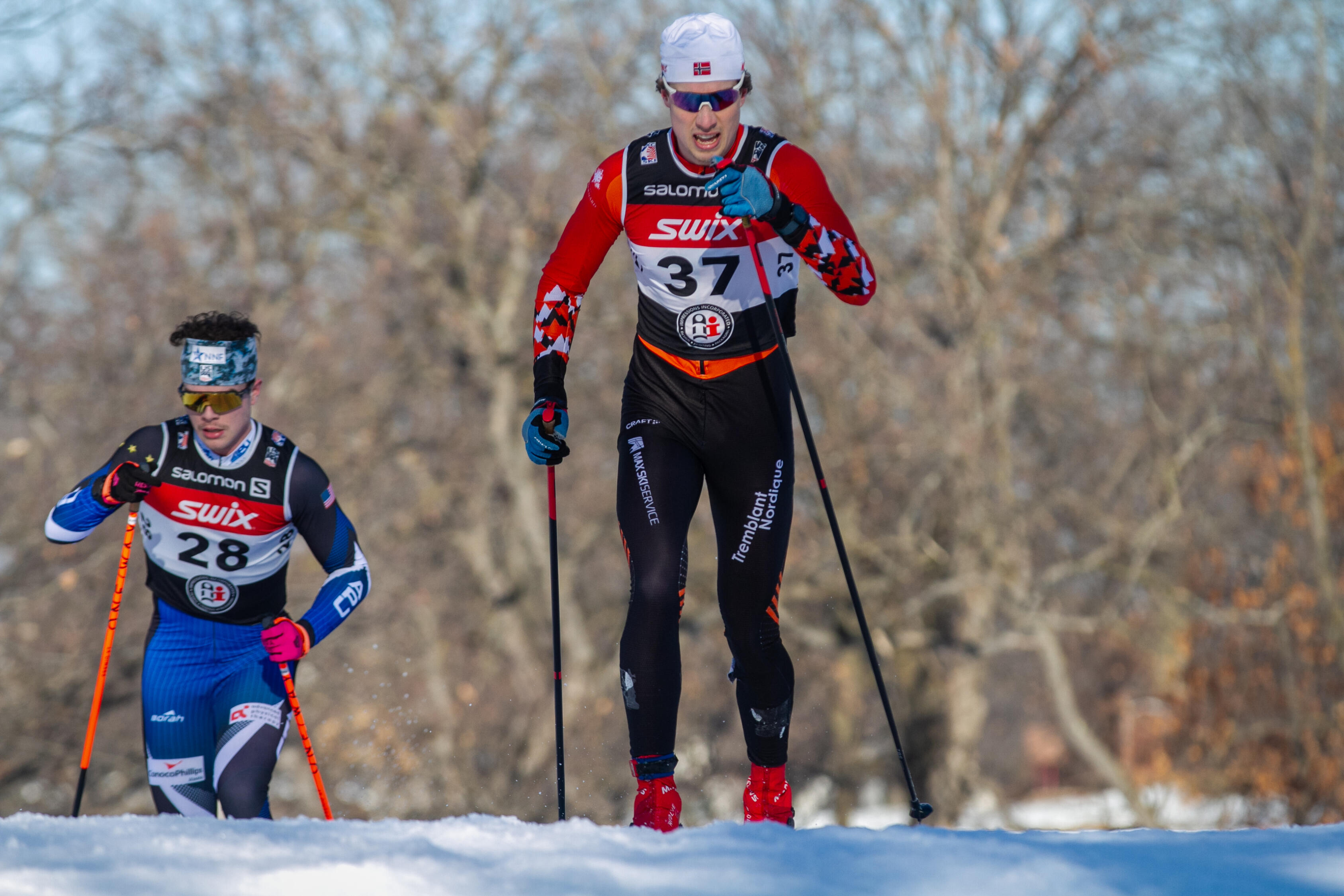
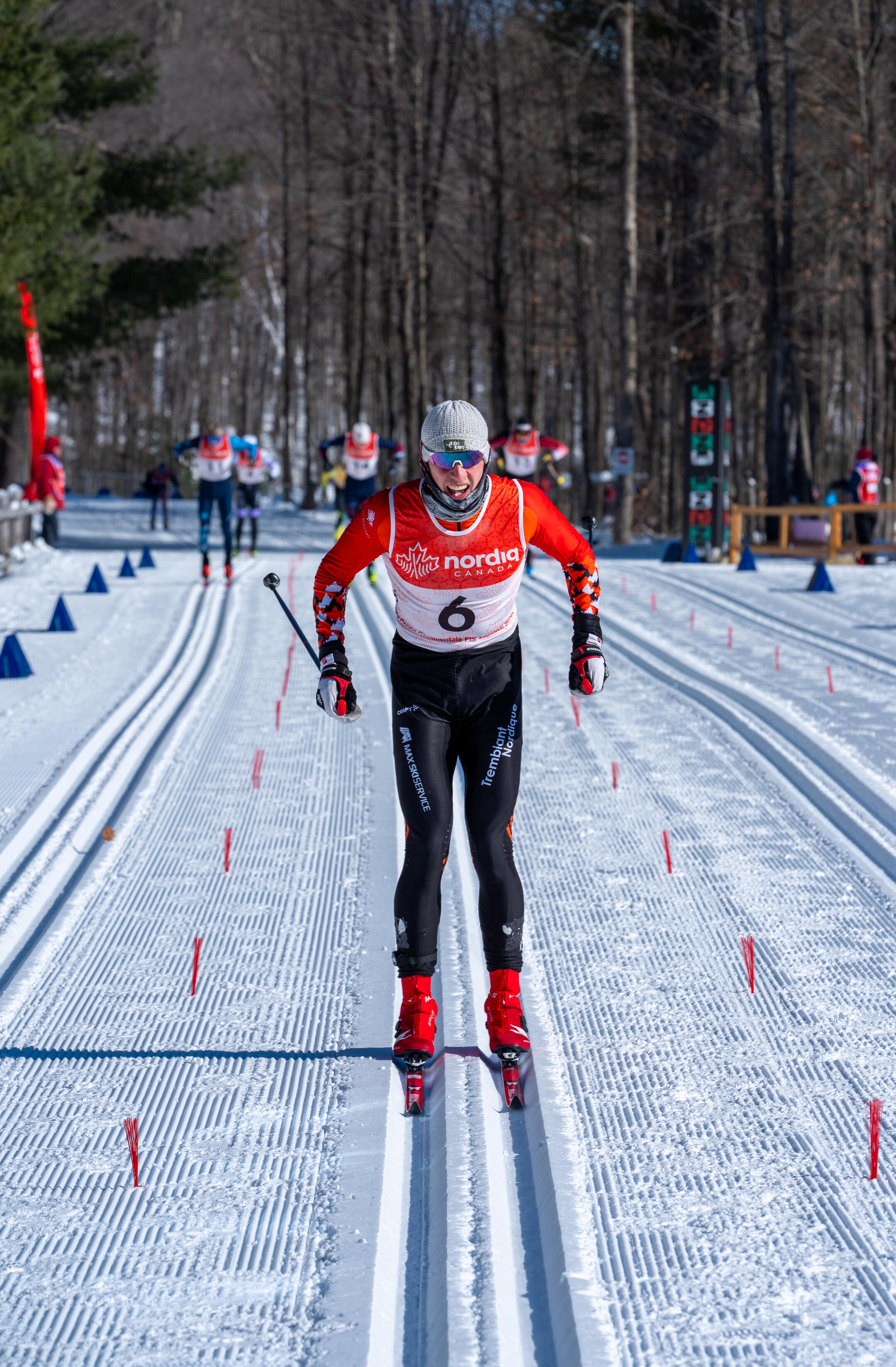
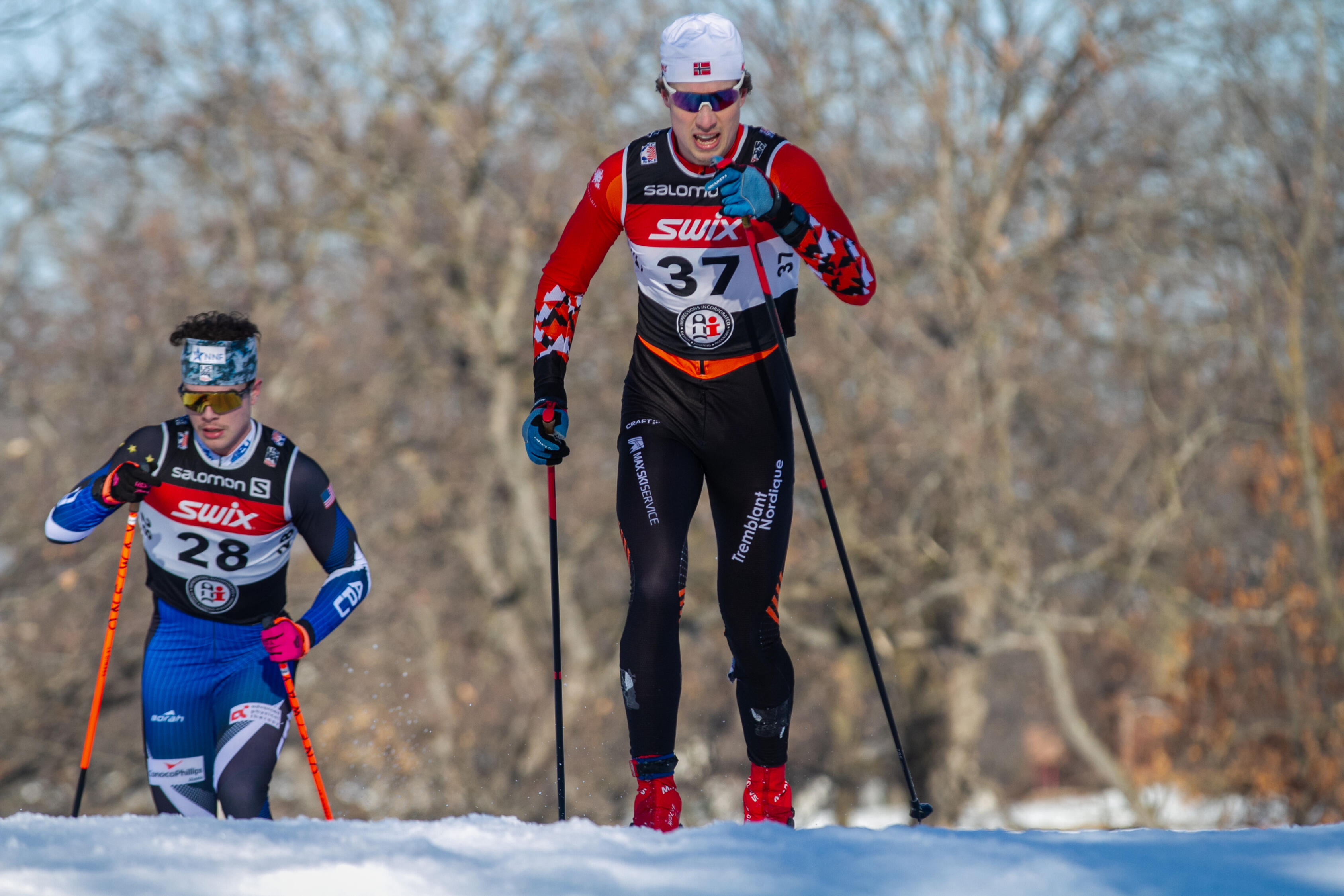
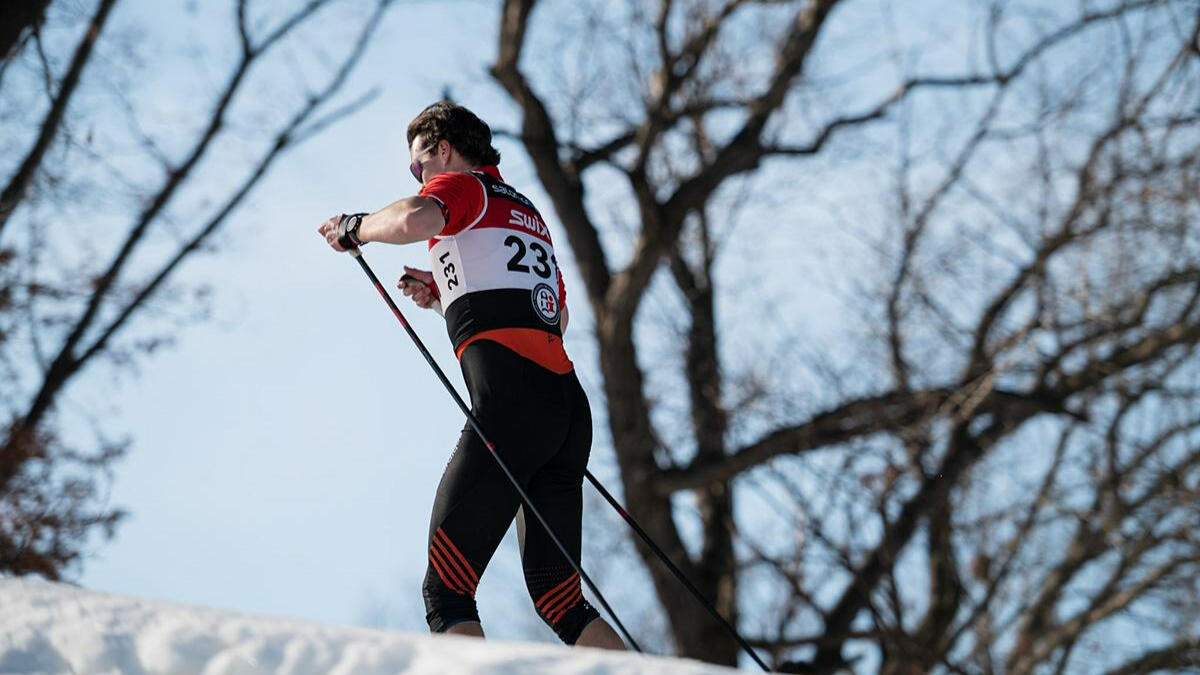
The course in lake placid is notorious for being incredibly demanding. I found myself surprised at how much I enjoyed the course, especially for how much climbing there was. The week would be composed of two sprint races, and two distance races. I improved throughout the week, with what was already a personal best in a distance race at nationals, I started the championship with a top 50. The next race, I got a top 40. The following a top 30, and, to be consistent, wrapped it up with a top 20!
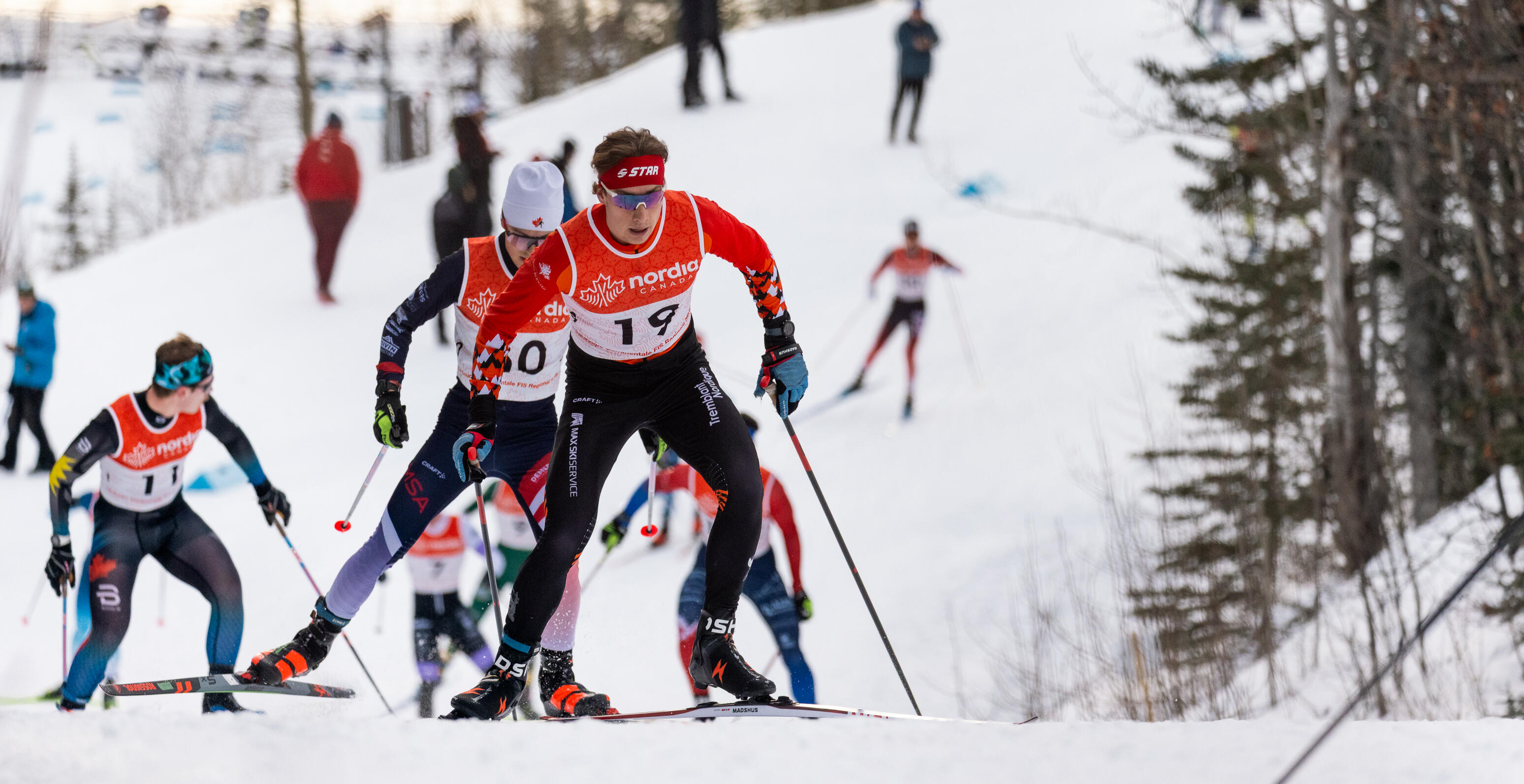
A good showing of the best (domestic) Canadian athletes took to the starts. I found myself within the top 10 Canadians at every race, which is a step up since Olympic trials. Surprisingly, my second best day came in the longest event of the week, the 20km skate mass start. With just over 700 meters of elevation gain, it was a good show of fitness and smart skiing on my end. I had some ripping fast skis that day, which was also consistent during the week. A huge shoutout goes to my college coach and his team for taking me under his wing for the week. It felt good to be part of a system I knew, and that provided great results. But now a little insight to the point side of racing, the part where the numbers add up:
How the heck do FIS points work and why should I care? Well, it has more weight than you'd think. FIS points determine your international ranking, and are typically used as a criteria for making different competitions. In fact, to qualify for world cup finals at the end of the year, I'll need to be ranked in the top 12 Canadians on the FIS list.FIS points aren't consistent from race to race. This is where things get tricky. In order to have a consistent international ranking, FIS uses an equation that measures the depth of the field for each race. It calculates a race ''penalty'' based on the athletes that finish in the top 5 of every race. If the top 5 athletes have good FIS points, the equation gives a smaller penalty. In theory, this means that the competition was ''strong'' because the best ranked skiers won. On the flip side, it also means that if a few ''poor'' ranked skiers have great races and end up in the top 5, the equation will spit out the assumption that the depth of the race wasn't that good, and that the points are adjusted accordingly.In cross-country skiing, you want your FIS points to be as close to 0 as possible. When you race world cup, there is no penalty, and if you win you get 0 points. However, in some of the races I did this week, the penalty varied from 40 to 125 (meaning the winner got 40 , or 125 points), and then based on our time behind him, the other athletes were awarded higher points.
A part of the reality is that everyone is in the same boat. Kinda. See, your FIS ranking is based off of your 5 best races over the past 365 days. So for some people, poor FIS points this week didn't matter as they know they have good points in the bank. For others, it was rough to see high penalties as every race counts to make world cup finals. All in all, you can't get too caught up with the FIS points. On my end, I had another show of consistency, and showed not only an improvement in comparison to my results in the past four years, but also a step up in my skiing smarts and speed. Furthermore, I was prepared for the day when my skis were running fast. That felt pretty damn good.
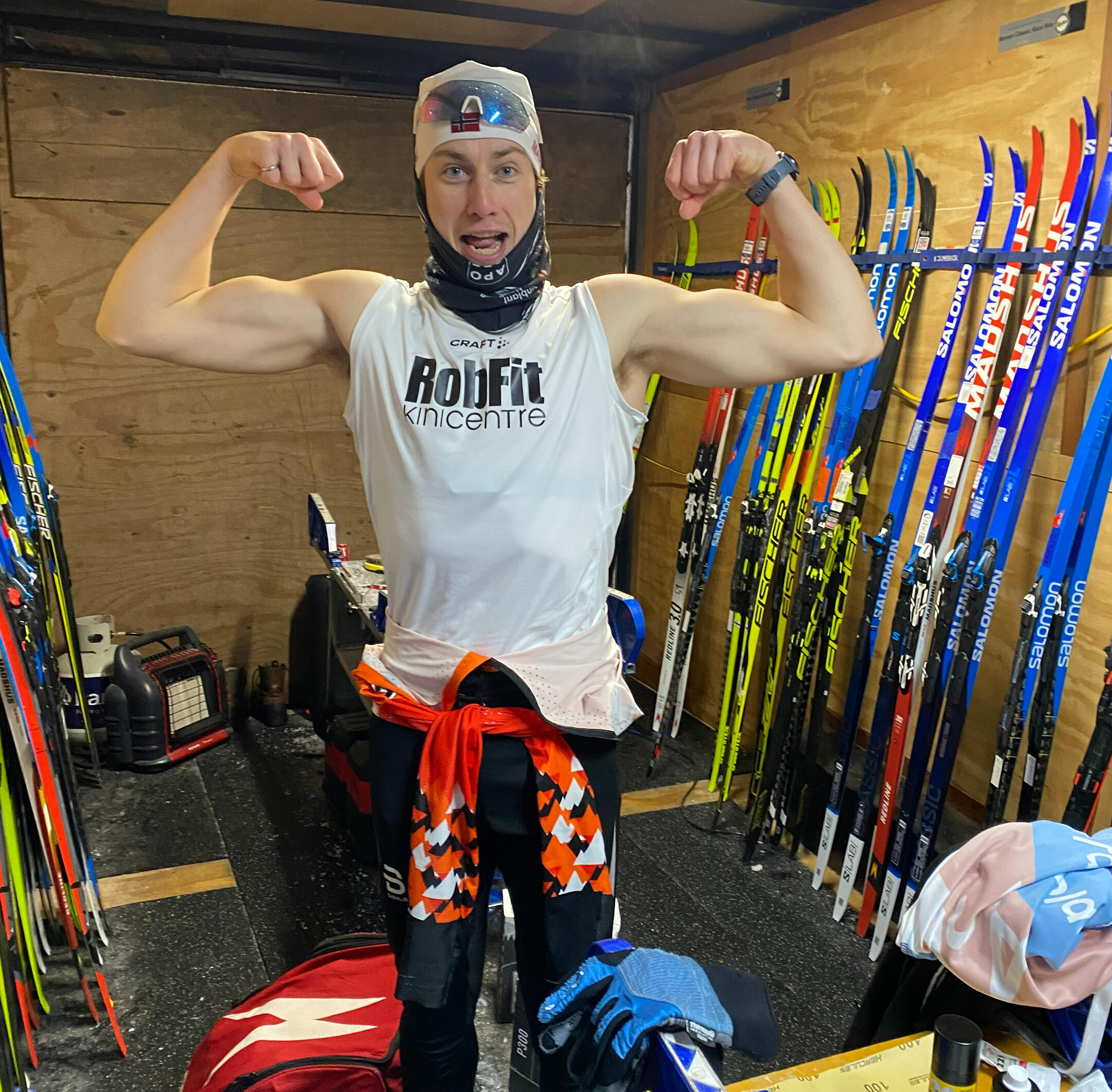
A part of the success of the season thus far comes down to creating a learning system. I'm of the opinion that if you don't have a method to objectively assess what does or doesn't contribute to your performance, you won't be prepared for race day, nor will you be consistent. Because of the system, I've been able to quickly learn my race day/week practices that have helped with my performance. This week, not only did I tap into some new strategies, but I was able to lock into some consistent habits that I really liked (who knew fried chicken makes your race so fast?!). Another part of this system though, is the flexibility. It's a fine line to play with, but knowing what things you need to have dialed in, and what things are meant to be fluid is valuable insight.
The mental game of skiing is also hard to manage. Every race effort is brutal. How you decide to approach that is important, and I've found myself to be better prepared this year. Only a few words can describe the slow grin that spread across my face when I knew my effort was about to go through the roof:
Let's dance m*********s!
Western and Eastern Canadian Championships
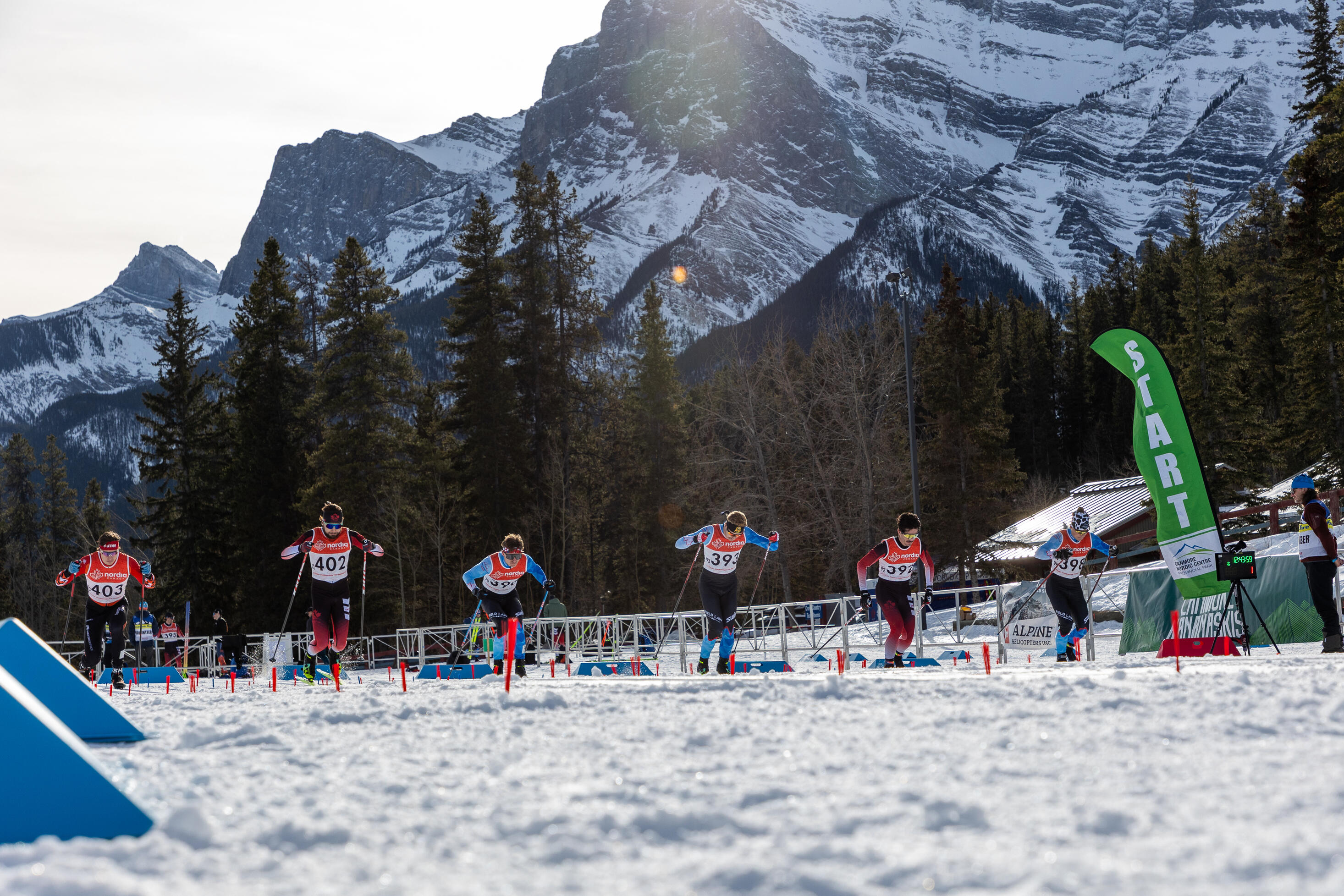
Sometimes, it's best to travel with a non-expired driver's license. Especially if you're interested in renting a car at the airport you land at.After sweet talking my way into finding a car, the first event of the biggest race block of the season was a go. The Western Canadian Championships were hosted at the Canmore Nordic Center during an atypical week of warm weather for the end of January. The weekend was a qualifier for U23 and Junior World Championships, and a lot of younger athletes were delivering strong performances. I had some of my own battles beyond racing to settle with Canmore, as I had experienced an incredibly frustrating and disappointing national championships to end last years season at the same venue.
I managed to deliver another weekend of consistent performances. I made my first national level semi-final in the sprints, and also performed a strong race in the 20km mass start, my worst race of last years national championships. I'm stoked about the progression, even if I sought out for a bit more on the results side. Looking back at my preparation, I had a lot of training under my belt from the previous two weeks. I didn't feel like I could deliver my fastest skiing, and yet at the same time I felt like I was priming my body for the rest of the season. This is a new and exciting feeling for me at this point of the season, as I believe it shows that I have good energy, and that there's more developments to look forward to. It's not an uncommon occurrence for athletes to start feeling burnt out around this time of year. Being on the flip side physiologically is motivating, especially when I think of all the base work I've done for this year.
A quick turnaround from Canmore brought me home for two days before I drove to Gatineau for Eastern Canadian Championships. A frigid weekend awaited the competitors on tracks I hadn't raced on since I was a junior.
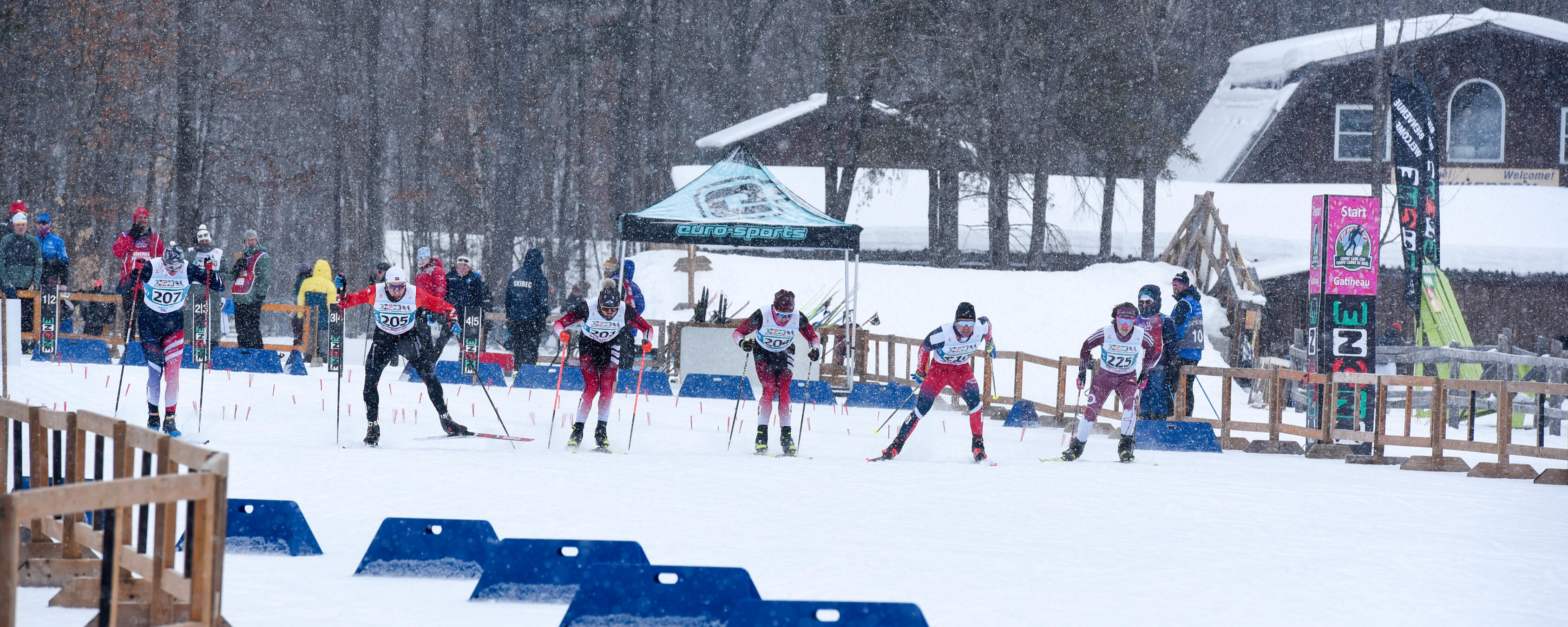
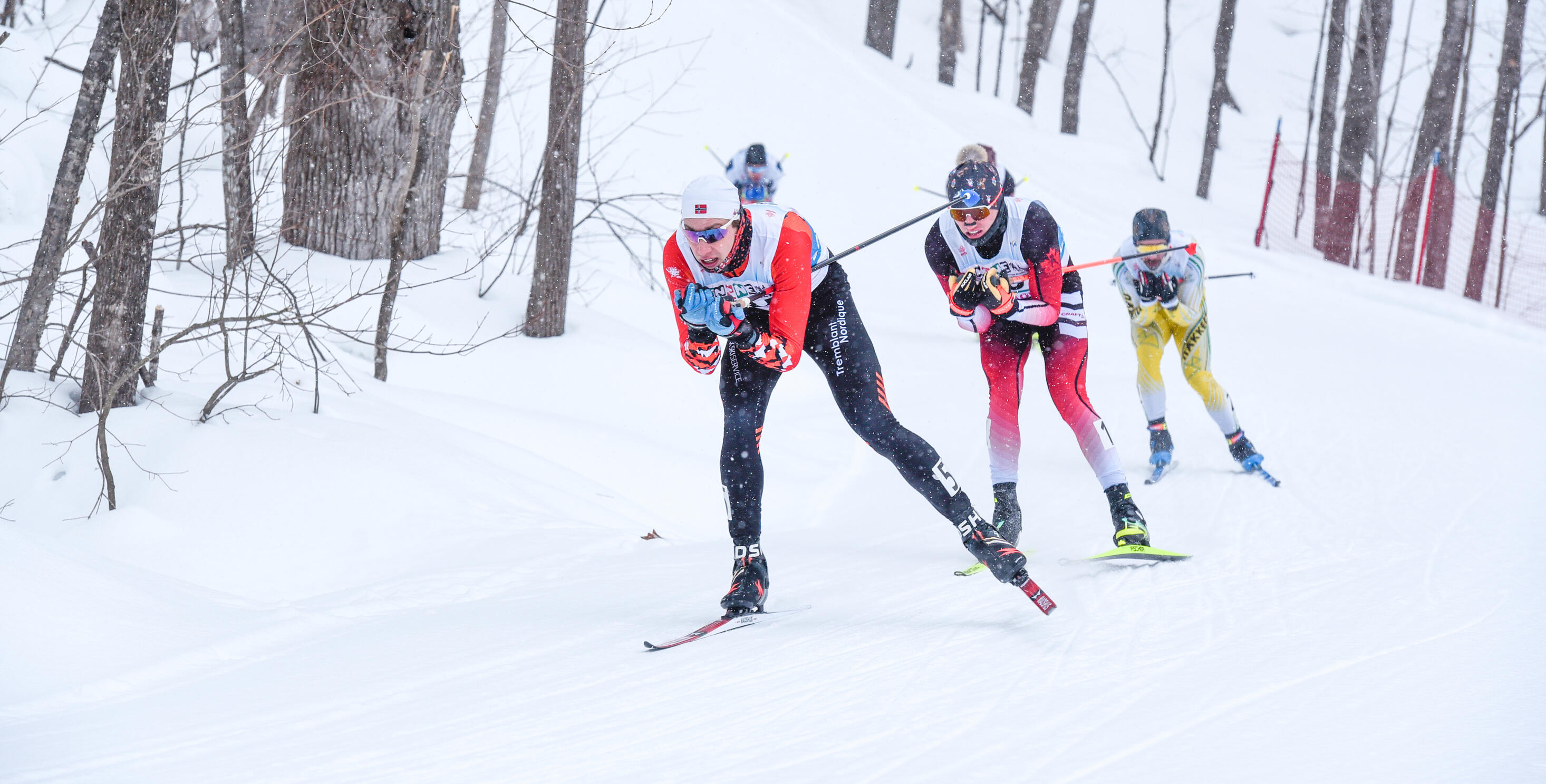
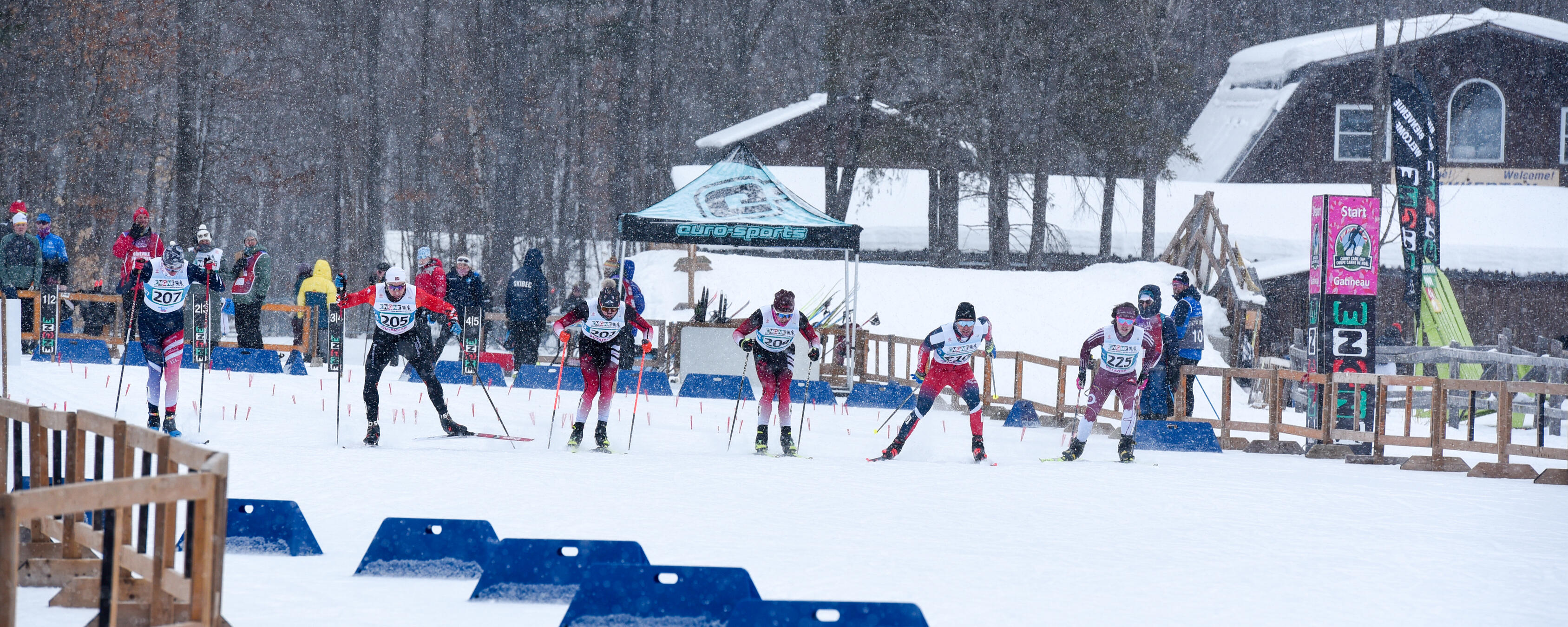
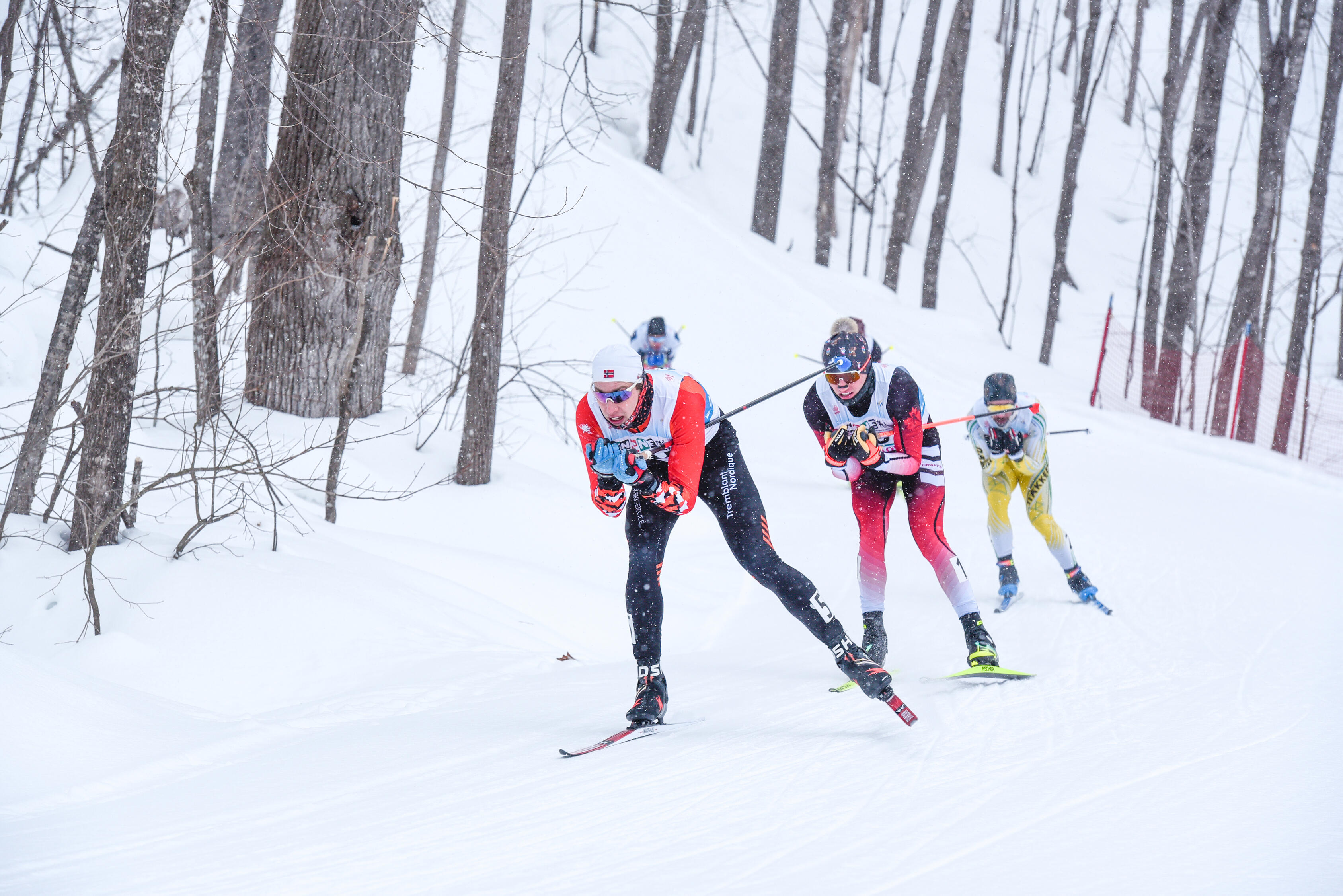
Another three-race weekend kicked off on Friday, where I made the finals in the sprint race, my first time as a senior. I raced well during the day, and led a part of the final. The 10km skate race didn't feel like a bad race, but I was completely off the pace of the top guys. At this point of the championships, it was hard to really believe in my form, but I was rewarded no less than 24 hours later during the last race of the weekend. The 10km classic mass start was fast and furious. There were attacks on almost every 'attackable' sections of the course, and I hung on with the fastest guys till about 7km in. I held my own and didn't loose any positions, finishing 5th on the day. This was a huge day for me. I felt connected with my skiing and threw down with some skiers who are typically on the world cup for Canada.
Another fast turnaround from the last race had me on my way to the Walmart in Sudbury, where I chowed down on some questionable lunch meats and slept in the Silver Bullitt on a nice cool evening (about -22 I believe). I'm now getting ready for two weekends of racing in the US before the last small break of the season.
Let's dance m***********s!
Minneapolis Super Tour and the American Birkebiner
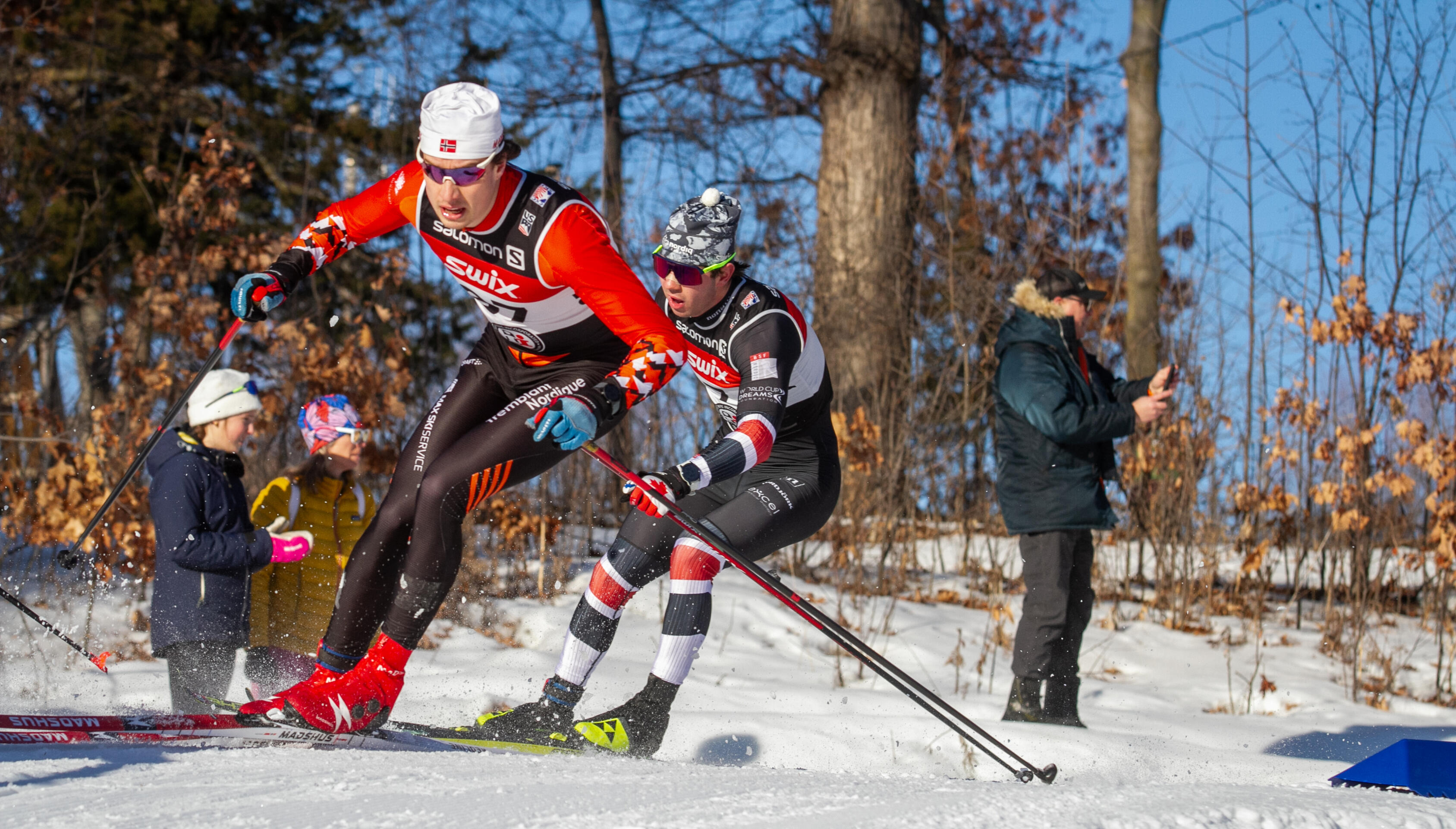
After staying in Houghton, Michigan for a few days, I made my way west to Minneapolis. I was staying with some old teammates who are racing for an american team based out of the twin cities. It was only a two day weekend, featuring a classic 10km mass start on Saturday and a 10km skate individual start on the Sunday.
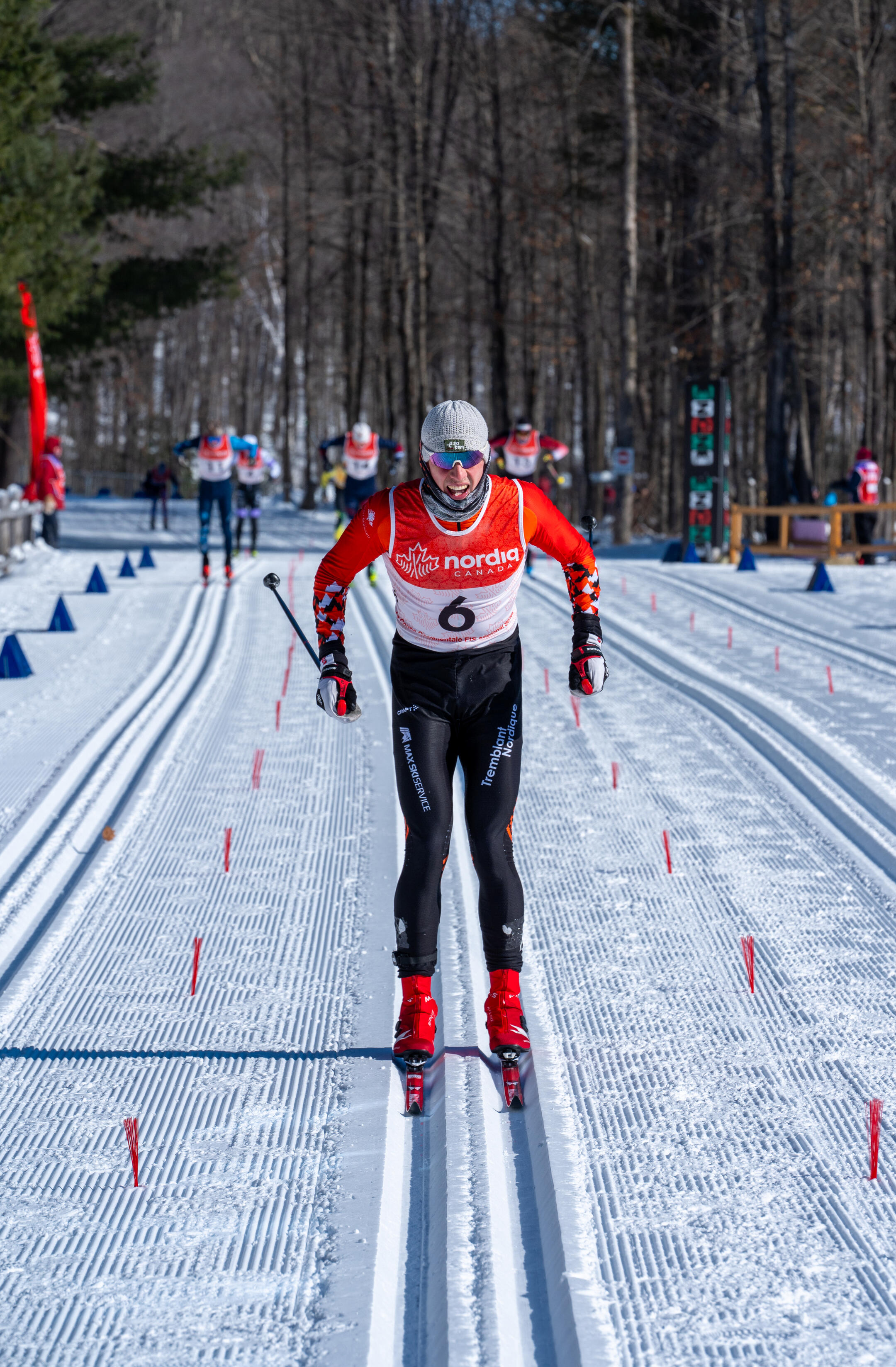
I had previously raced at wirth park, and spectated at the world cup two years ago on the same course as we would race. I was pretty inspired from those races, and had a good idea of what I needed to accomplish on the track to get good results. The 10km classic mass start is slowly becoming one of the races that gets me pumped up. The race pace is deadly from the gun, and chaos ensues as everyone tries to find positions through the first few kilometers of the course. Sure enough there were falls, broken poles, skiers off the track and lots of skiing into other athletes before the lead pack started to establish itself. I had a good start, but was just a bit off the pace. I needed everything to go perfectly to hang on, but I wasn't able to stay in contact near the halfway point, and did my best to finish fast. A personal best result at a US super tour distance race was the outcome, and it was nothing to be upset about.
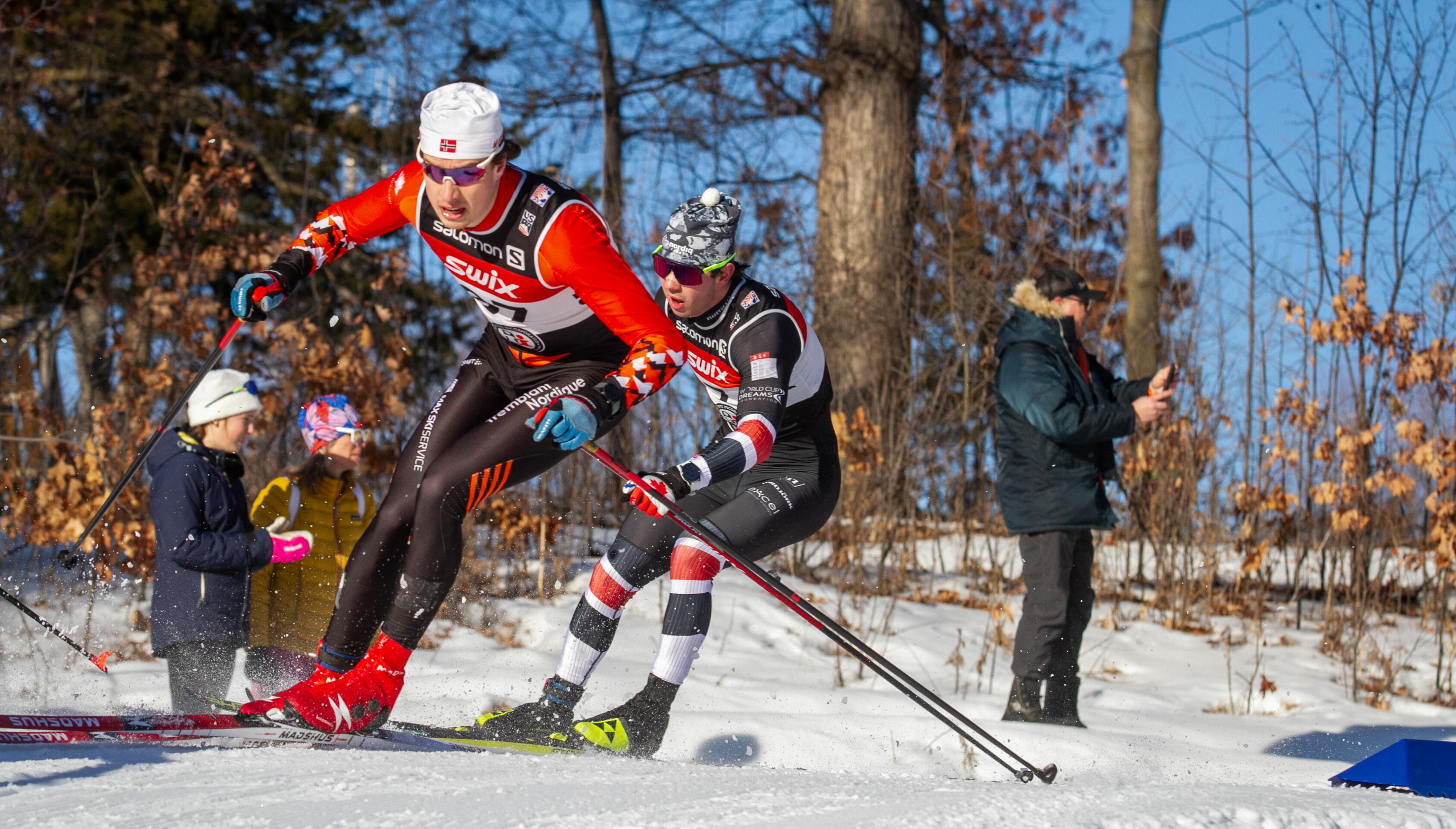
The following day was the 10km skate. I started hard, and found myself pacing with the race leaders. The race was brutal, I skied the main climbs of the course with a lot of confidence, which made for fast times, but also cost me in my energy management. A big part of skiing is threading the line between going too hard and staying consistent. You need to over pace during the race, but if you can't hold good technique, or flow through transitions, your over pace was probably a bit too deep. That's where I found myself, but the race was short enough that my final result placed me in 8th place, only a few seconds away from 6th, which makes the podium. This was a huge personal best for me at a US super tour.
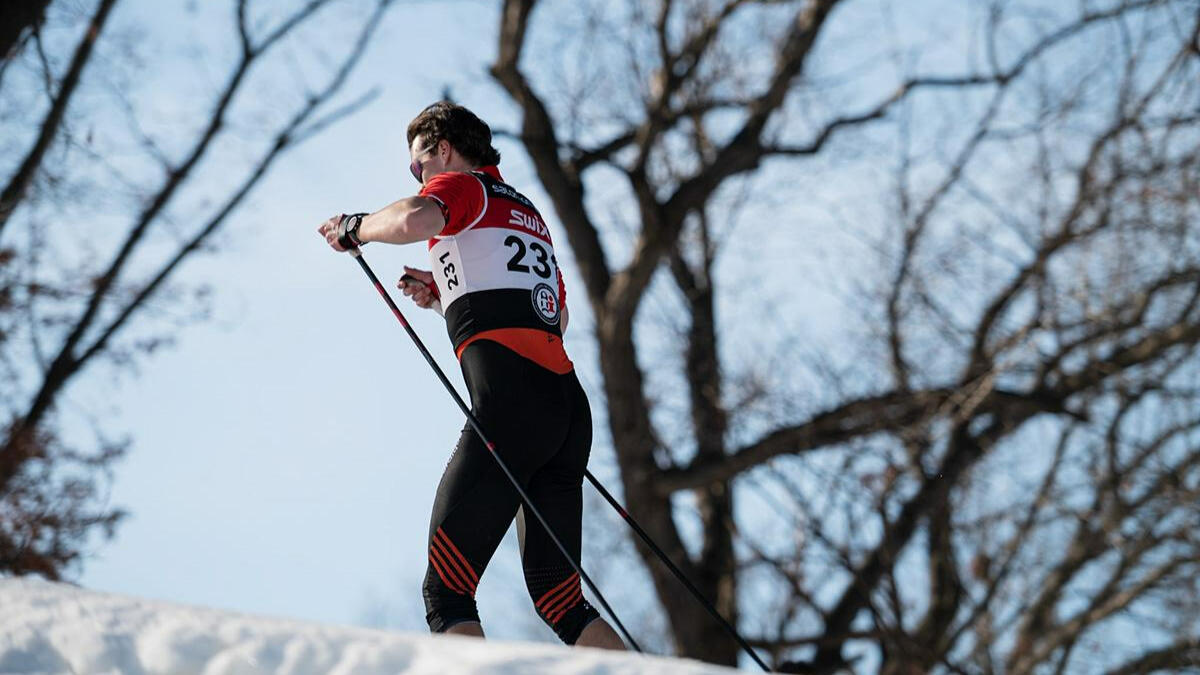
I stayed in Minneapolis for a few days, where I picked up another Québécois that wanted to race the American Birkebiner. We drove up to Hayward, Wisconsin on the Friday, tested our skis, waxed our race skis, found our bibs, and then wrapped up the night at a small saloon where we got the lowdown on the curling Olympic tournament as we ate our large pizzas (carb loading is sometimes a blessing). The next morning was the start of the biggest ski race in North America: The American Birkebiner. A point to point 50km skate race which brings in quite a few international skiers who race for some serious cash prizes.
This was my first true 50km. The conditions were incredibly fast, and it was obvious that if you wanted to be competitive, you needed to be with the front pack for as long as possible. The top guys were skiing so fast. I was really digging deep to stay on them, knowing that slowing down could be detrimental to the outcome. A little over 30 minutes into the race, a few of us fell off the back and had our own chase pack working together. We picked up a few other athletes as we barreled down the trail. Arguably the most important part of this race was nutrition. When you spend so much time at such a high intensity, you need to replenish your energy stores. Now I didn't have much practice, so my expectations weren't very high for nailing my nutrition, but I didn't think I'd drop one of my two bottles 5km into the race. But don't worry, the other bottle only froze over with about 15km to go. Oh, and those gels I packed? I lost a few of them and ate half of one at the midpoint of the race. Thankfully there were lots of aid stations, where I'd throw down whatever liquid that was in the cup if I managed to hold onto it as we flew by the volunteers. I only had a little bit of cramping, but what's a ski marathon without some adversity right?
The Amercian Birkebiner has a lot features that make it unique, but in my mind, the temporary bridge that crosses the mainstrip of hayward, and the long finishing stretch that goes through downtown where they truck snow in the week before is the highlight. We had a great battle within the pack, and I squeezed out whatever energy that I had to get across the line.
And just like that, four weeks of racing comes to an end. The step up in performance is very encouraging, and I'm happy with the progression of the season. I've been incredibly fortunate to have several different people share their resources with me as I ski bum my way around the races. I owe them all a big thank you.
Now its back to the basics as we line up for the final race block of the season in two weeks.
Let's dance m***********s!
Les Sélections Olympiques
Tu gagnes, ou tu apprends. Les sélections ont été à la fois une réussite et une occasion d’apprentissage.Je suis arrivé aux sélections avec quelques ajustements imprévus. Le plus important a été de gérer une douleur qui s’est développée au pied droit à cause de mes bottes. Ça a demandé beaucoup de flexibilité dans ma préparation, puisque je devais prendre chaque journée à la fois pour arriver aux courses dans les meilleures conditions possibles.Je me suis rappelé: Pour que mon plan fonctionne, je ne dois pas oublier qu'il doit justement tenir compte du fait qu'il ne se déroulera pas exactement comme je l'avais planifié.
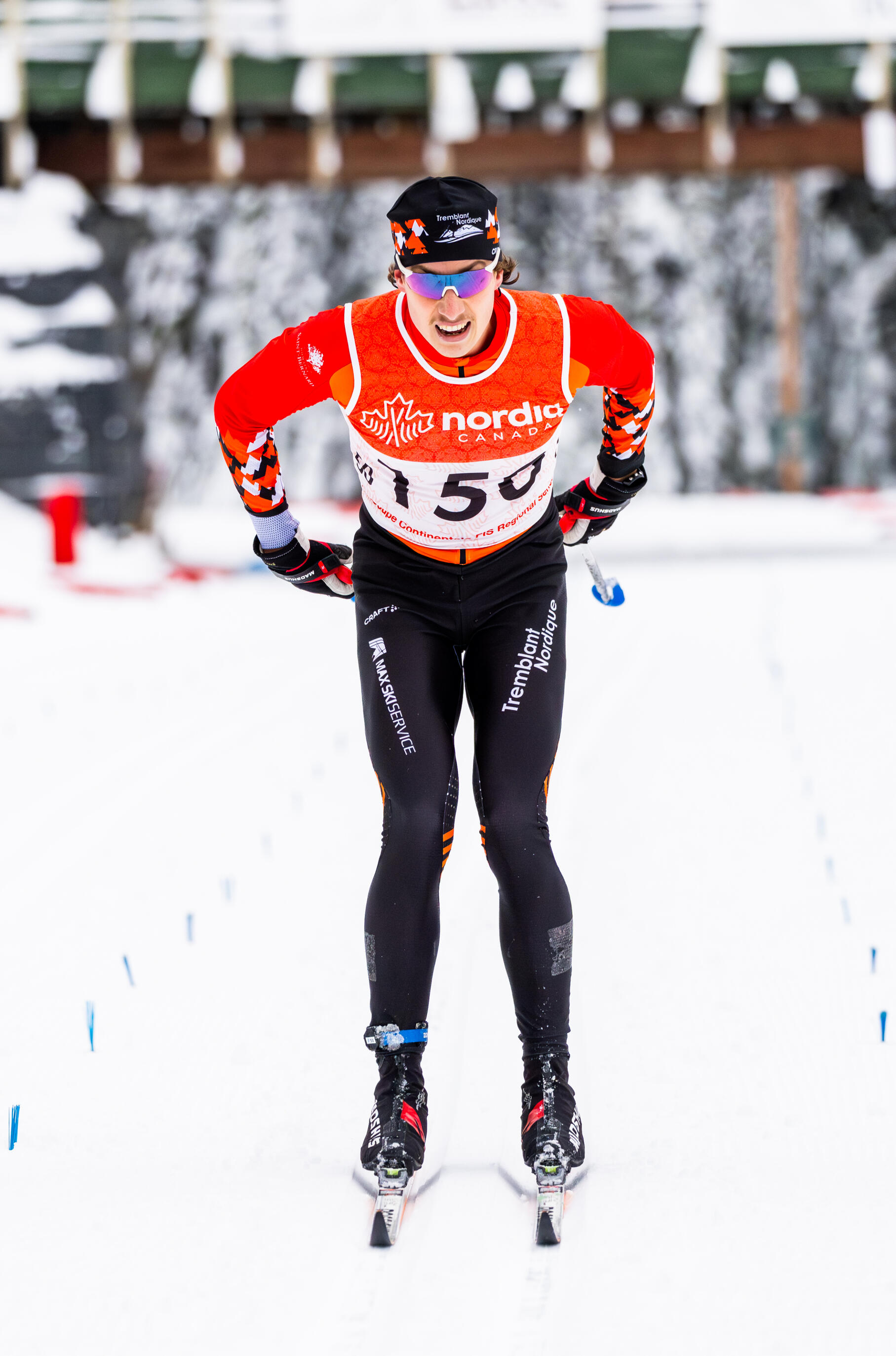
Les conditions étaient parmi les plus difficiles possibles pour le fartage. La météo changeait d’heure en heure, parfois même d’une heure à l’autre, et les pistes évoluaient constamment. Sans compter que la neige variait à l’intérieur même de la boucle de course. Dans mon sport, une partie de l’art de gagner, c’est d’avoir des skis rapides. Comme on peut l’imaginer, des conditions changeantes autant au niveau de la température que de la neige rendent les décisions du groupe de fartage particulièrement complexes.Malgré les systèmes en place et les années d’expérience qui servent à préparer le meilleur ski possible, il y a toujours une part de chance. Cette fois-là, c’est moi qui ai pigé la courte paille. J’ai longuement réfléchi à la réalité de cette variable. La chose la plus importante que je peux faire pour moi-même, c’est d’être bien informé et préparé sur tout ce que je peux contrôler, afin que lorsque la chance tourne en ma faveur, je ne laisse pas au hasard ce qui peut être préparé.Il est important de souligner que cet aspect du ski est frustrant. J’ai une conviction à 100 % que dans chacune des courses où j’ai pris le départ, je skiais sur le meilleur fart et les meilleurs skis que l’équipe pouvait trouver ce jour-là. Parfois, d’autres auront trouvé quelque chose de comparable, plus rapide ou plus lent. Dans le même ordre d’idées, la relation entre le personnel de soutien et l’athlète est cruciale. Sans un enthousiasme partagé et une motivation commune à tirer le maximum des skis, même le ski le mieux préparé peut sembler lent.J’ai eu la chance de faire partie d’un groupe qui a pris sous son aile moi-même et d’autres athlètes indépendants, et qui nous a soutenus tout au long des courses. Pour ça, je me considère chanceux et profondément reconnaissant.
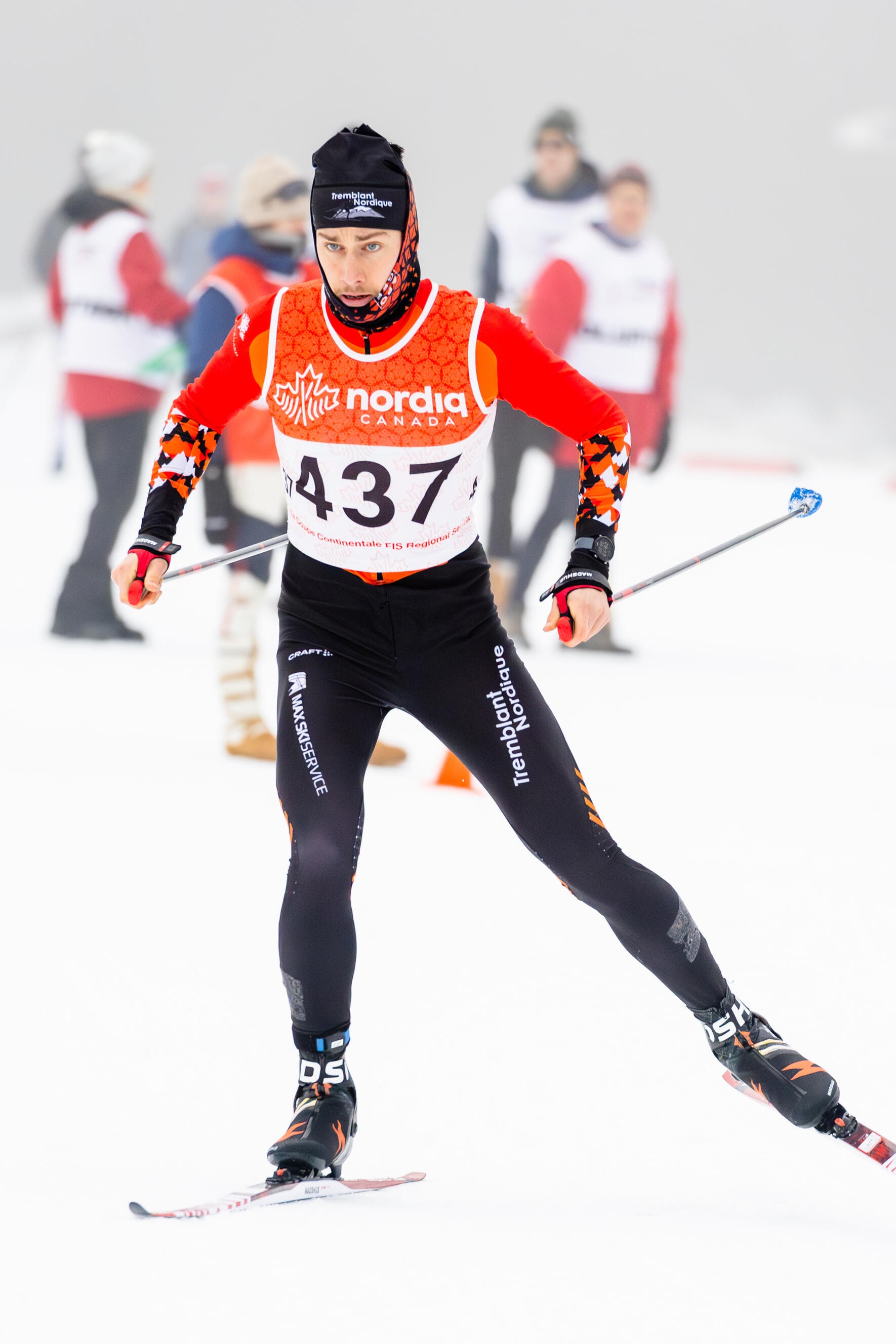
De façon générale, ma perception de la semaine de courses est que je me sentais « flat », un peu vidé. Le ski de fond est un sport de puissance-endurance où il faut être à l’attaque. Il faut imposer son rythme au parcours, et non l’inverse. J’ai senti que j’avais de la difficulté à rester à l’attaque et que je me faisais brasser un peu — beaucoup moins qu’avant par contre, ce qui représente une grosse amélioration de ce côté-là.Cet été et cet automne, j’ai consacré beaucoup de temps à travailler ma capacité à livrer des efforts constants, peu importe à quel point j’étais fatigué ou courbaturé. Clairement, ça a porté fruit. Par contre, se sentir « dégonflé » et se sentir fatigué, ce n’est pas la même chose.Je repars avec beaucoup de notes et de réflexions sur comment mieux me préparer pour les prochaines courses.
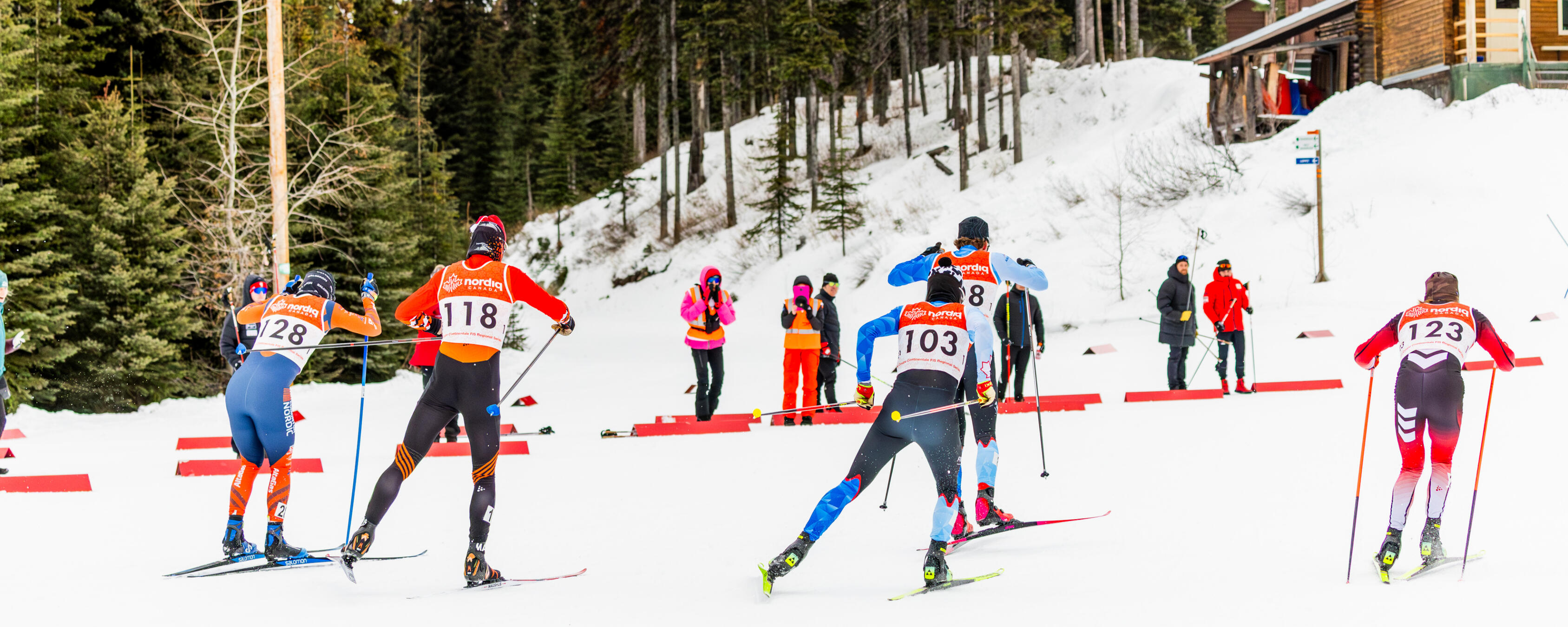
Les sélections olympiques ont confirmé que j’ai progressé comme athlète. Au cours des dernières années, j’ai été constamment inconstant. Par contre, tout au long de la semaine, j’ai été le plus constant que je ne l’ai jamais été. En réalité, il s’agit probablement d’une de mes meilleures semaines de compétition en carrière, justement à cause de cette constance.Cela dit, le fait de ne pas m’être retrouvé plus haut au classement me laisse avec une faim encore plus grande.
L’aventure ne s’est toutefois pas arrêtée là pour moi, puisqu’un long trajet à travers le pays m’attendait encore. Observer des bisons dans le parc national Theodore Roosevelt et dormir dans la voiture à −22 °C (−30 °C avec le refroidissement du vent) dans le nord du Minnesota ont été les moments forts du voyage.Heureusement, je m’en suis tiré avec seulement un pneu crevé lors de ma première journée de retour à la maison — à quelques minutes à peine de la porte.
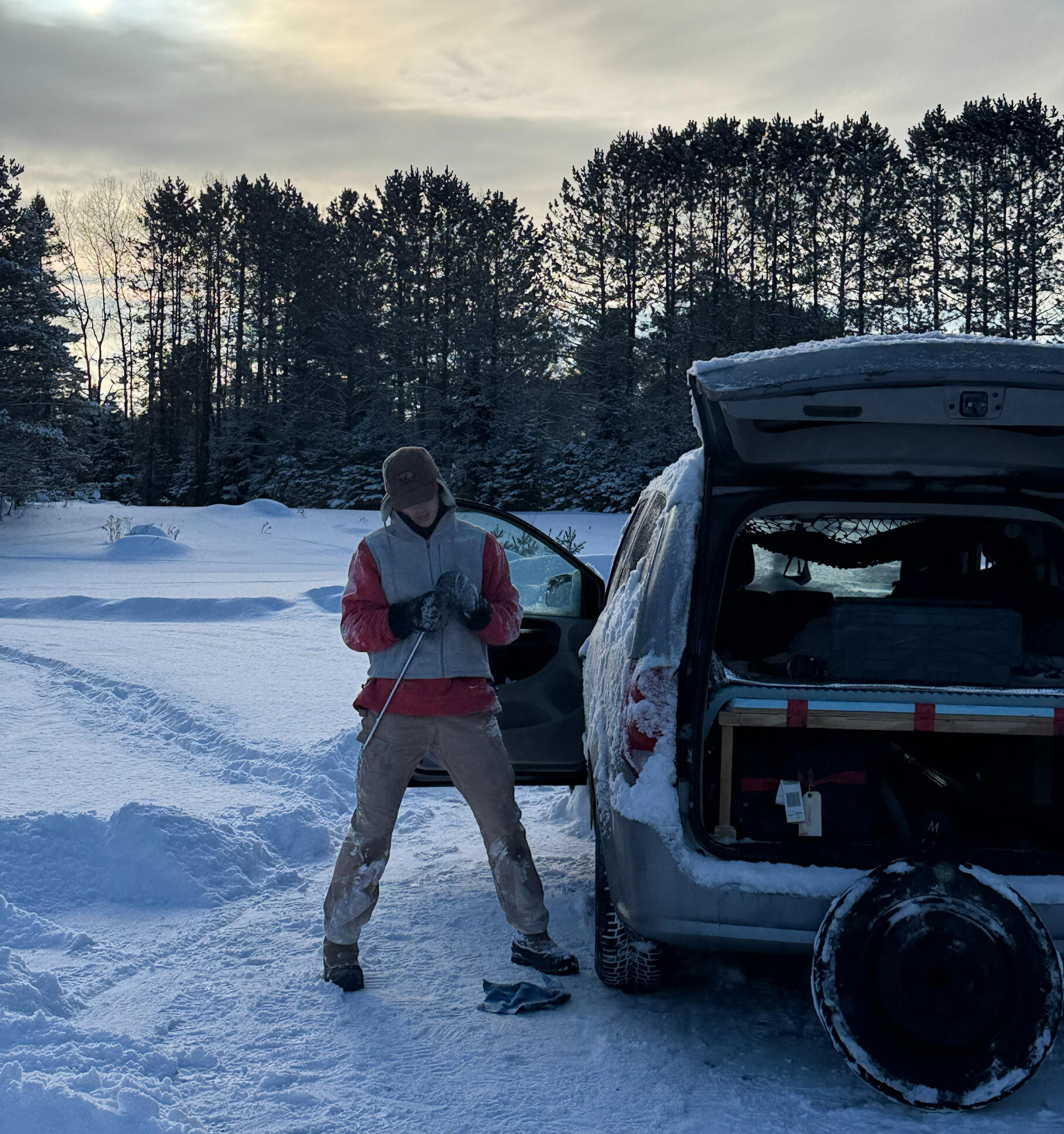
Un immense merci à toutes les personnes qui m’ont envoyé des messages d’encouragement et qui m’ont soutenu pendant que je poursuis ma saison. Après avoir passé de nombreuses heures à Tremblant cet été, j’ai eu la chance de bâtir une communauté de soutien incroyable, et en parcourant le continent à la poursuite de la neige, j’ai aussi trouvé de solides appuis un peu partout.Je souhaite à tout le monde une très bonne année. Souriez un peu plus grand, riez un peu plus fort et dansez un peu plus follement!
La suite : les Championnats nationaux seniors américains à Lake Placid, du 4 au 9 janvier. Let's dance m***********s!
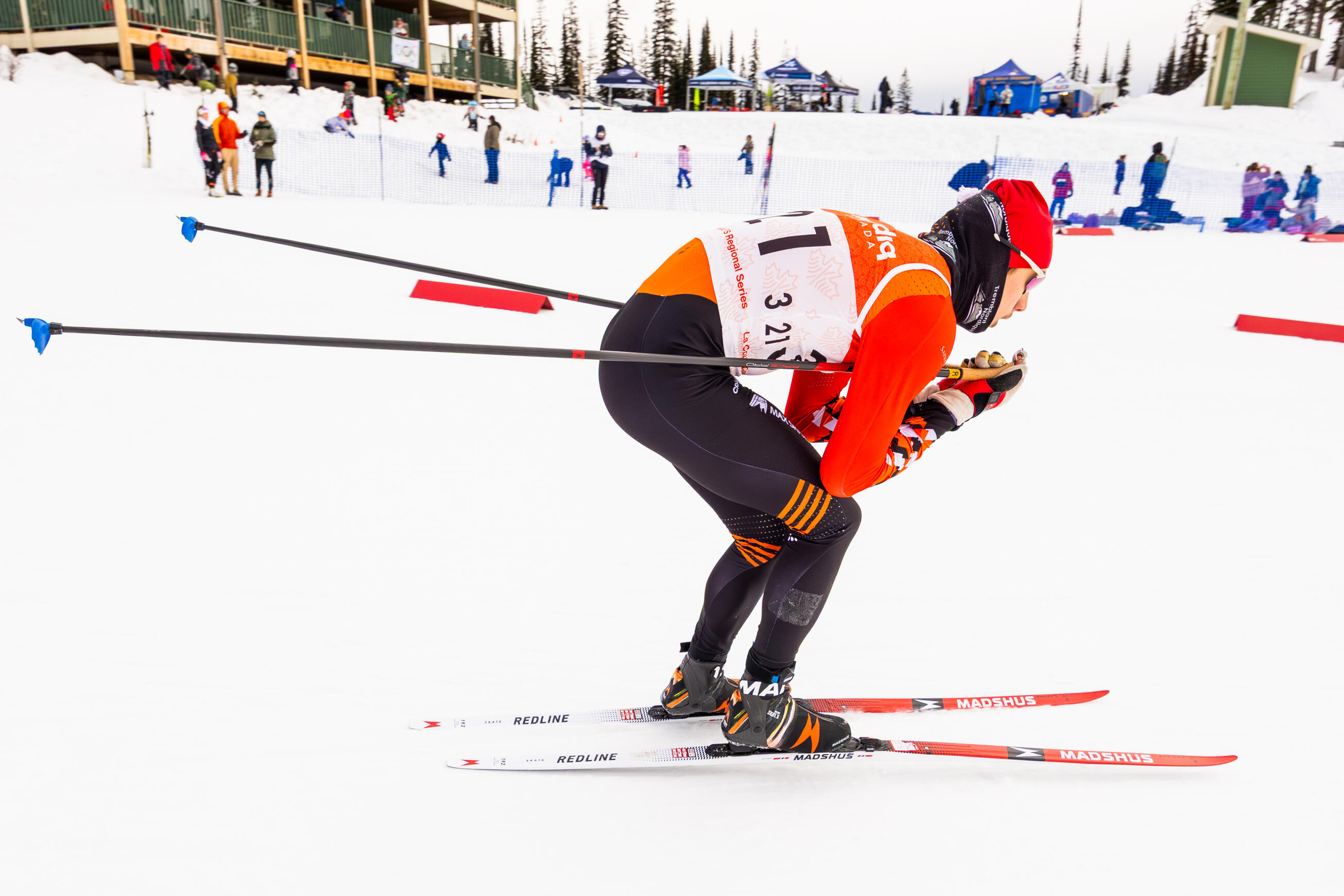
Crédit photos: Vanessa Garrison [email protected]
Les championnats nationaux américains
Les championnats nationaux américains, c’est toujours une semaine de course complètement incroyable. Sur le plan domestique, c’est le plateau le plus relevé de l’année. Les athlètes universitaires, les pros du circuit américain et les juniors les plus rapides se retrouvent tous au même endroit pour tout donner. Le milieu collégial amène aussi beaucoup d’athlètes internationaux : quand tu regardes les listes de résultats, tu vois une tonne de drapeaux européens et scandinaves.Pour ajouter à toute cette effervescence, c’était aussi la dernière chance pour les Américains de se qualifier pour les quelques places restantes sur leurs équipes olympiques. Finalement, c’était le plus gros US Nationals de l’histoire en termes de participation, et aussi le plateau le plus profond jamais vu. Rien de trop sérieux…
Après quatre années à compétitionner aux États-Unis, ce serait la première fois que je prendrais le départ des championnats nationaux sans porter le noir et or des Huskies. Pourtant, ce qui allait devenir toute une semaine de meilleures performances personnelles ressemblait surtout à des retrouvailles avec des amis venus d’un peu partout.
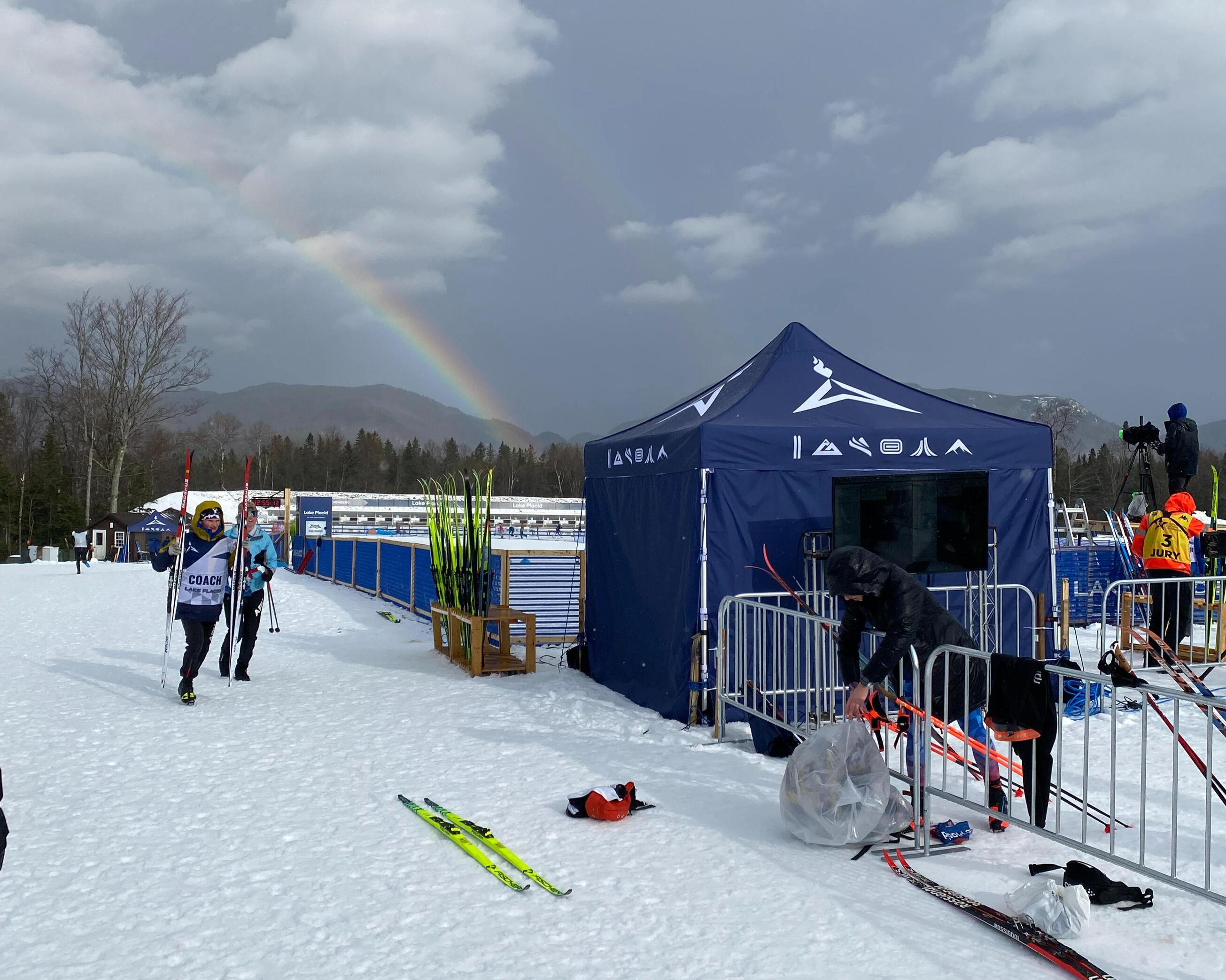
Le parcours de Lake Placid est reconnu pour être extrêmement exigeant. J’ai été surpris de constater à quel point je l’ai aimé, surtout considérant la quantité de dénivelé. La semaine était composée de deux sprints et de deux courses de distance.J’ai progressé tout au long de la semaine. Déjà, mon résultat d’ouverture — un top 50 en distance aux nationaux — représentait un record personnel. À la course suivante, j’ai décroché un top 40. Puis, un top 30. Et pour rester cohérent jusqu’au bout, j’ai terminé ça avec un top 20!
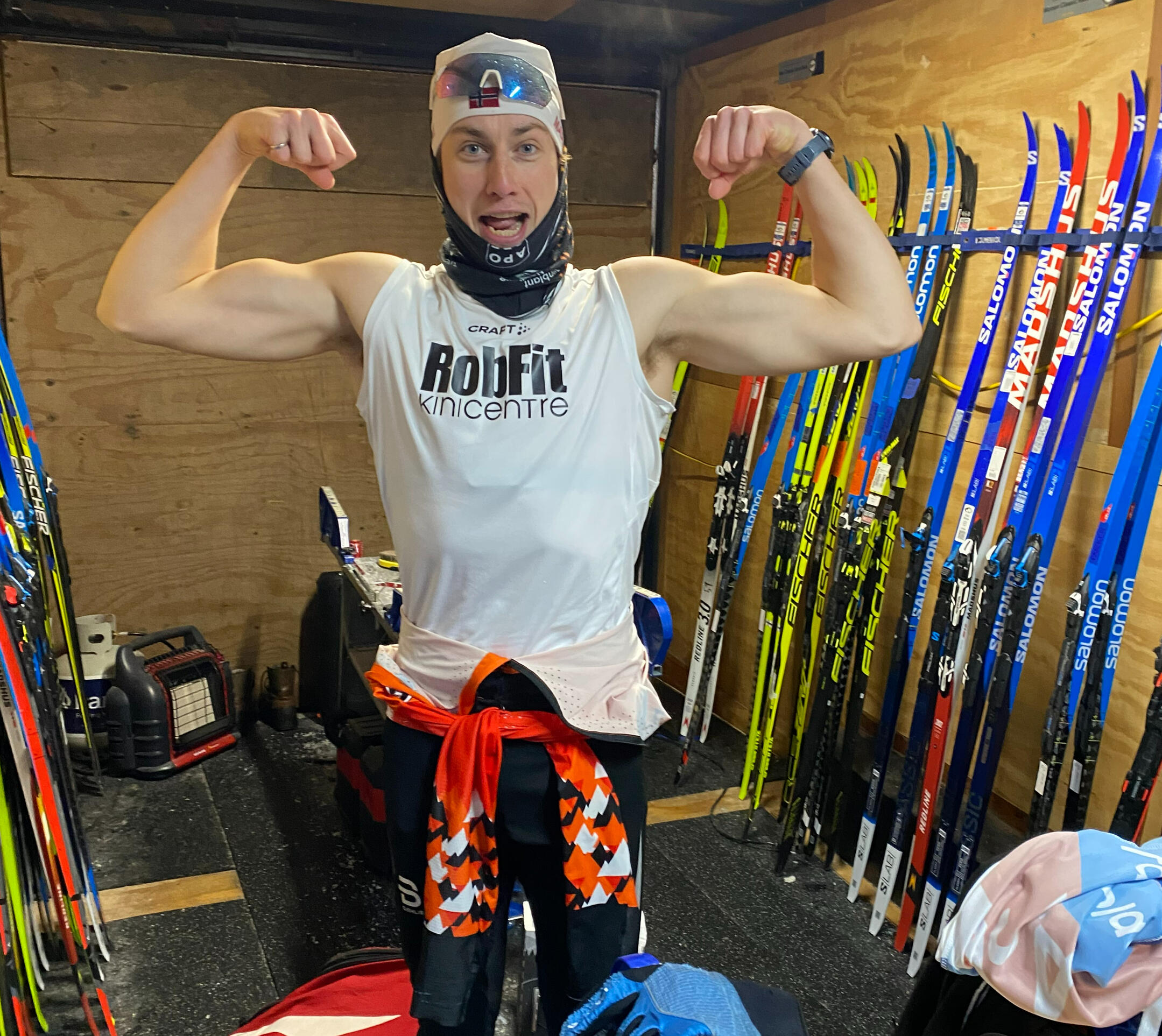
Un bon contingent des meilleurs athlètes canadiens (au niveau domestique) était sur les lignes de départ. Je me suis retrouvé parmi le top 10 des Canadiens à chaque course, ce qui représente une belle progression depuis les sélections olympiques. Fait surprenant, ma deuxième meilleure journée est venue lors de l’épreuve la plus longue de la semaine : le départ de masse en patin de 20 km. Avec un peu plus de 700 mètres de dénivelé positif, c’était une bonne démonstration de forme et de ski intelligent de ma part.J’avais des skis vraiment rapides ce jour-là, et ça a été constant tout au long de la semaine. Un immense merci à mon coach universitaire et à son équipe de m’avoir pris sous leur aile pour la semaine. Ça faisait du bien de faire partie d’un système que je connais, et qui livre d’excellents résultats.Mais maintenant, un petit aperçu du côté « points » de la course, là où les chiffres s’additionnent :
C’est quoi au juste les points FIS, et pourquoi je devrais m’en soucier? Eh bien, ça a pas mal plus d’importance qu’on pourrait le croire. Les points FIS déterminent ton classement international et servent souvent de critère de sélection pour différentes compétitions. Concrètement, pour me qualifier aux finales de la Coupe du monde en fin de saison, je devrai figurer parmi les 12 meilleurs Canadiens sur la liste FIS.Les points FIS ne sont pas constants d’une course à l’autre — et c’est là que ça se complique. Pour obtenir un classement international cohérent, la FIS utilise une équation qui mesure la profondeur du peloton pour chaque course. Elle calcule une « pénalité » de course en fonction des athlètes qui terminent dans le top 5. Si ces cinq premiers ont déjà de bons points FIS, l’équation donne une petite pénalité. En théorie, ça veut dire que la compétition était « forte », puisque ce sont les skieurs les mieux classés qui ont gagné.À l’inverse, si quelques skieurs moins bien classés réalisent d’excellentes courses et se retrouvent dans le top 5, l’équation va supposer que la profondeur du champ n’était pas aussi élevée, et les points seront ajustés en conséquence.En ski de fond, tu veux que tes points FIS soient le plus près possible de zéro. En Coupe du monde, il n’y a pas de pénalité : si tu gagnes, tu obtiens 0 point. Par contre, dans certaines des courses que j’ai faites cette semaine, la pénalité variait entre 40 et 125 — ce qui veut dire que le gagnant repartait avec 40 ou 125 points — et ensuite, selon notre écart de temps avec lui, les autres athlètes recevaient encore plus de points.
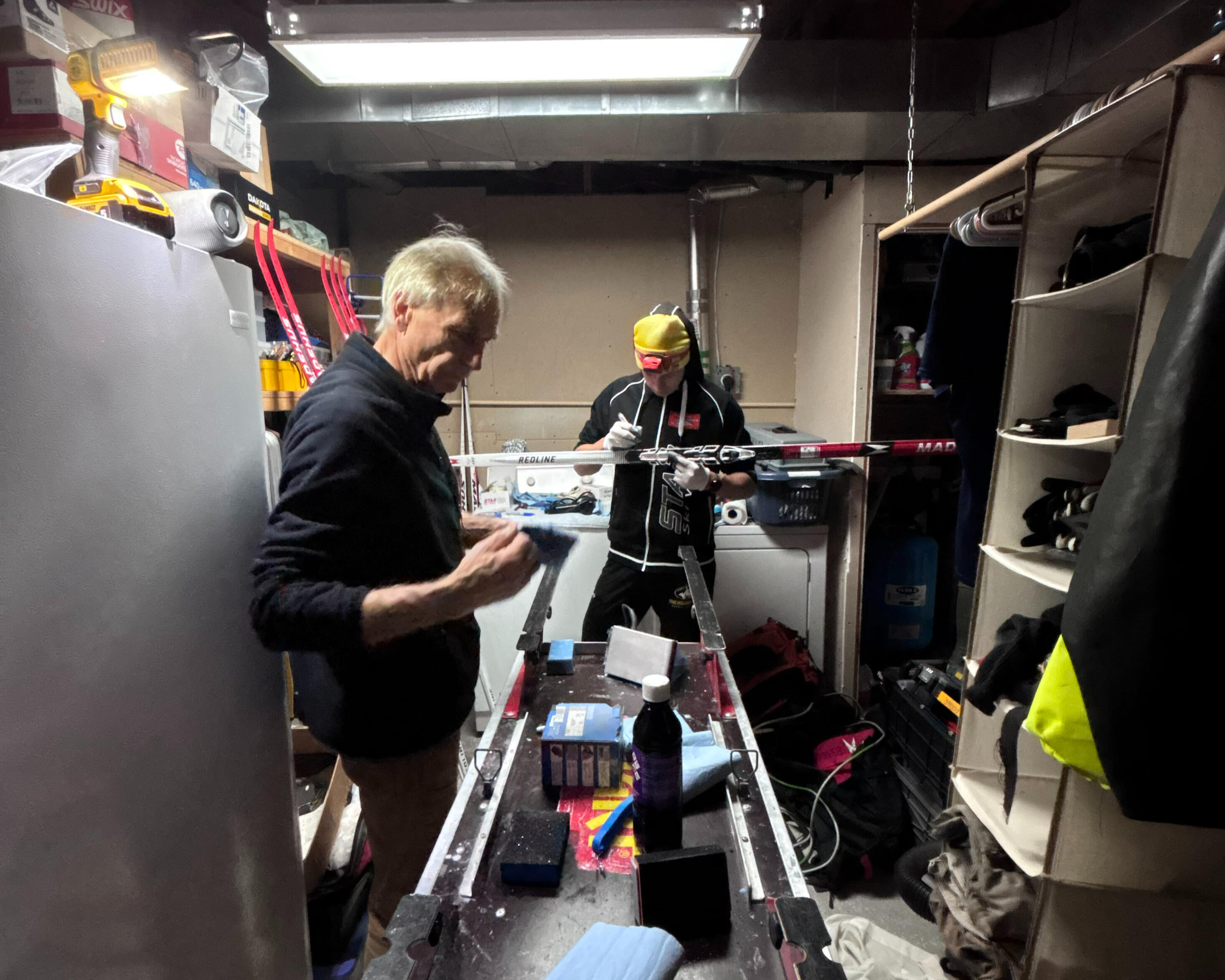
Une partie de la réalité, c’est que tout le monde est un peu dans le même bateau. Un peu. Tu vois, ton classement FIS est basé sur tes cinq meilleures courses des 365 derniers jours. Donc, pour certains, de mauvais points cette semaine n’avaient pas vraiment d’impact, puisqu’ils savent qu’ils ont déjà de bons points « en banque ». Pour d’autres, c’était plus difficile à encaisser, parce que chaque course compte dans la course aux finales de la Coupe du monde, et voir de grosses pénalités peut faire mal.Bref, tu ne peux pas trop te laisser obséder par les points FIS. De mon côté, j’ai offert une autre démonstration de constance. J’ai non seulement montré une progression par rapport à mes résultats des quatre dernières années, mais aussi une nette amélioration dans mon intelligence de course et ma vitesse. Et surtout, j’étais prêt pour les journées où mes skis allaient être rapides. Ça, ça faisait vraiment du bien.
Une partie du succès de la saison jusqu’à maintenant repose sur la création d’un véritable système d’apprentissage. Je suis convaincu que, si tu n’as pas de méthode pour évaluer objectivement ce qui contribue — ou non — à ta performance, tu ne seras ni prêt le jour de la course, ni constant. Grâce à ce système, j’ai pu rapidement identifier les routines de journée et de semaine de course qui m’aident réellement à performer.Cette semaine, non seulement j’ai testé de nouvelles stratégies, mais j’ai aussi solidifié certaines habitudes que j’ai vraiment aimées (qui aurait cru que le poulet frit rendait si rapide en course?!). Une autre composante essentielle de ce système, c’est la flexibilité. C’est une ligne fine à marcher, mais savoir ce qui doit absolument être bien « setté » et ce qui peut rester fluide, c’est une information précieuse.
L’aspect mental du ski est aussi difficile à gérer. Chaque effort en course est brutal. La façon dont tu choisis d’aborder ça est primordiale, et cette année, je me suis senti beaucoup mieux préparé. Il n’y a que quelques mots pour décrire le lent sourire qui s’est dessiné sur mon visage au moment où j’ai su que mon effort allait exploser :
Let's dance m***********s!
Championnats canadiens de l’Ouest et de l’Est
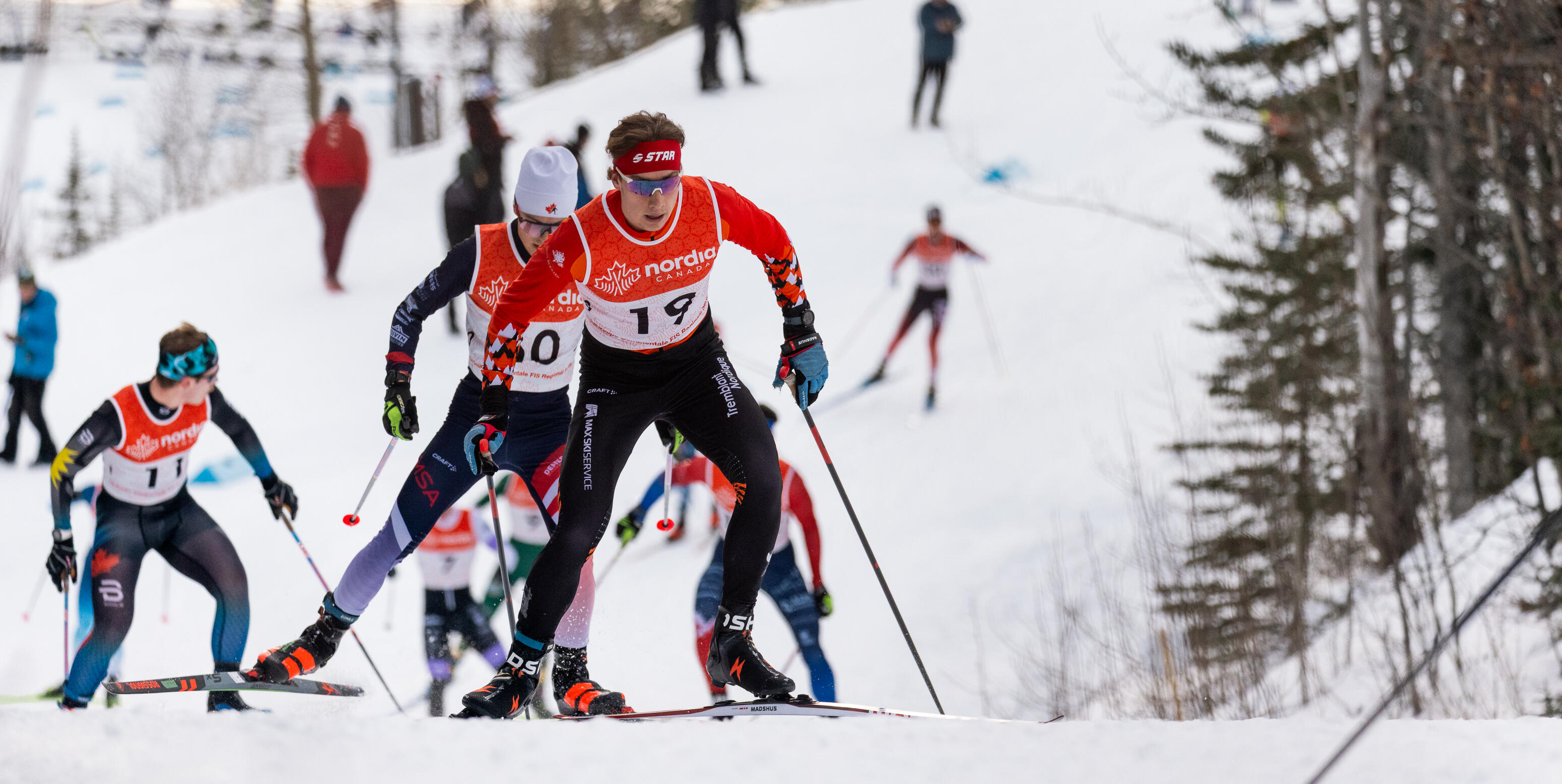
Parfois, c’est mieux de voyager avec un permis de conduire valide. Surtout si tu veux louer une voiture en arrivant à l’aéroport.Après avoir réussi à m’arranger à force de jaser un peu, j’ai finalement trouvé une voiture et le plus gros bloc de courses de la saison pouvait commencer. Les Championnats canadiens de l’Ouest avaient lieu au Centre nordique de Canmore, pendant une semaine anormalement chaude pour la fin janvier.Le week-end servait de qualification pour les Championnats du monde juniors et U23, et plusieurs jeunes ont livré de très grosses performances. De mon côté, j’avais aussi un petit compte à régler avec Canmore. J’y avais terminé la saison dernière avec des Championnats nationaux extrêmement frustrants et décevants, sur ces mêmes pistes.
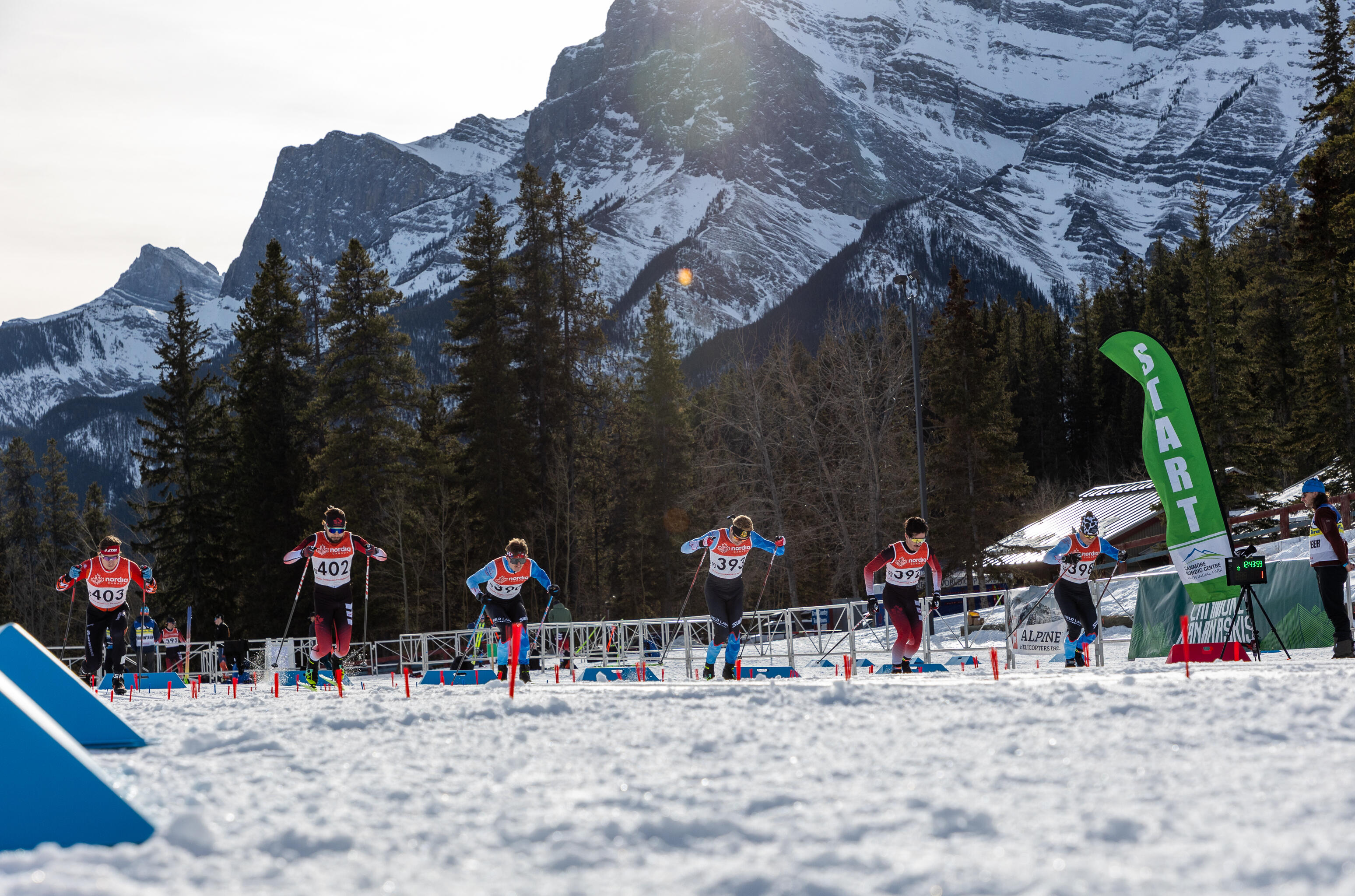
J’ai réussi à enchaîner un autre week-end solide et constant. J’ai atteint ma première demi-finale au niveau national en sprint, et j’ai aussi livré une bonne performance au 20 km départ de masse, qui avait été ma pire course aux Nationaux l’an dernier.Je suis vraiment content de la progression, même si j’en voulais un peu plus côté résultats. Quand je regarde ma préparation, j’avais énormément de volume d’entraînement dans les jambes après les deux semaines précédentes. Je ne sentais pas que j’avais mon ski le plus rapide, mais en même temps, j’avais l’impression de préparer mon corps pour le reste de la saison.C’est une sensation nouvelle et motivante à ce moment-ci de l’année. J’ai l’impression d’avoir une bonne énergie et qu’il reste encore du développement à venir. Ce n’est pas rare que des athlètes commencent à se sentir brûlés à cette période de la saison. Être à l’opposé physiologiquement, ça motive énormément, surtout quand je pense à tout le travail de base que j’ai fait cette année.
Un retour rapide de Canmore m’a permis de passer deux jours à la maison avant de prendre la route vers Gatineau pour les Championnats canadiens de l’Est. Un week-end glacial attendait les athlètes, sur des pistes où je n’avais pas couru depuis mes années juniors.
Un autre week-end de trois courses s’est amorcé vendredi, où j’ai atteint la finale du sprint, une première pour moi chez les seniors. J’ai bien skié toute la journée et j’ai même pris les devants pendant un bout en finale.Le 10 km skate ne m’a pas donné l’impression d’être une mauvaise course, mais j’étais complètement hors du rythme des meilleurs. À ce stade-là des championnats, c’était difficile de vraiment croire en ma forme. Par contre, moins de 24 heures plus tard, j’ai été récompensé dans la dernière course du week-end.Le 10 km classique départ de masse a été rapide et intense du début à la fin. Il y a eu des attaques dans pratiquement toutes les sections « attaquables » du parcours, et j’ai réussi à tenir avec les plus rapides jusqu’à environ 7 km. J’ai gardé ma place, je n’ai perdu aucune position, et j’ai terminé 5e.Ça a été une grosse journée pour moi. Je me sentais vraiment connecté à mon ski et j’ai livré bataille avec des gars qui sont habituellement sur le circuit de la Coupe du monde pour le Canada.
Un autre enchaînement rapide après la dernière course m’a amené au Walmart de Sudbury, où je me suis bourré de charcuteries un peu douteuses avant de dormir dans le Silver Bullitt par une belle soirée fraîche (autour de -22C si je me souviens bien).Je me prépare maintenant pour deux fins de semaine de courses aux États-Unis avant la dernière petite pause de la saison.
Let's dance m***********s!
Minneapolis Super Tour et l’American Birkebiner
Après être resté quelques jours à Houghton, au Michigan, j’ai pris la direction de l’ouest vers Minneapolis. Je logeais chez d’anciens coéquipiers qui courent pour une équipe américaine basée dans les Twin Cities. C’était un week-end de deux jours seulement, avec un 10 km classique départ de masse le samedi et un 10 km skate départ individuel le dimanche.
J’avais déjà couru à Wirth Park et assisté à la Coupe du monde il y a deux ans sur le même parcours que celui où nous allions compétitionner. Ces courses m’avaient vraiment inspiré et j’avais une bonne idée de ce que je devais accomplir sur la piste pour obtenir un bon résultat.Le 10 km classique départ de masse devient tranquillement une des épreuves qui me motivent le plus. Le rythme de course est brutal dès le départ, et le chaos s’installe pendant que tout le monde tente de se placer dans les premiers kilomètres du parcours. Comme prévu, il y a eu des chutes, des bâtons cassés, des skieurs hors trace et beaucoup de contacts avant que le groupe de tête commence à se former.J’ai pris un bon départ, mais j’étais légèrement en retard sur le rythme. Il aurait fallu que tout soit parfait pour m’accrocher, mais j’ai perdu le contact autour de la mi-course et j’ai fait de mon mieux pour finir fort. Au final, un meilleur résultat personnel en Super Tour américain sur une distance, ce qui n’a rien de décevant.
Le lendemain avait lieu le 10 km skate. Je suis parti fort et je me suis retrouvé à skier au rythme des meneurs. La course était brutale. J’ai monté les principales côtes du parcours avec beaucoup de confiance, ce qui m’a donné des temps rapides, mais qui m’a aussi coûté au niveau de la gestion de l’énergie.Une grande partie du ski consiste à trouver l’équilibre entre partir trop vite et rester constant. Il faut être en sur-régime pendant la course, mais si tu n’es plus capable de maintenir une bonne technique ou d’enchaîner les transitions avec fluidité, c’est que tu es probablement allé un peu trop loin. C’est exactement ce qui m’est arrivé.Cela dit, la course était assez courte pour que mon résultat final me place en 8e position, à seulement quelques secondes de la 6e place, qui montait sur le podium. C’est un énorme record personnel pour moi sur le circuit Super Tour américain.
Je suis resté quelques jours de plus à Minneapolis, où j’ai embarqué un autre Québécois qui voulait courir l’American Birkebiner. Nous avons pris la route vers Hayward, au Wisconsin, le vendredi : test des skis, fartage des skis de course, récupération des dossards, puis on a terminé la soirée dans un petit saloon où on a suivi le tournoi olympique de curling en mangeant nos grosses pizzas (le carb loading, c’est parfois une bénédiction).Le lendemain matin avait lieu le départ de la plus grande course de ski en Amérique du Nord : l’American Birkebiner. Un 50 km skate point à point qui attire plusieurs skieurs internationaux venus se battre pour des bourses assez importantes.
C’était mon premier vrai 50 km. Les conditions étaient extrêmement rapides et il était clair que, pour être compétitif, il fallait rester avec le groupe de tête le plus longtemps possible. Les meilleurs skiaient à une vitesse folle. Je creusais vraiment profond pour rester avec eux, sachant que ralentir pouvait nuire au résultat.Un peu plus de 30 minutes après le départ, quelques-uns d’entre nous ont décroché et nous avons formé notre propre groupe de poursuite en travaillant ensemble. Nous avons ramassé quelques autres athlètes en filant à toute vitesse sur la piste.Sans doute l’aspect le plus important de cette course était la nutrition. Quand tu passes autant de temps à une intensité aussi élevée, tu dois refaire le plein d’énergie. Je n’avais pas beaucoup de pratique, donc mes attentes n’étaient pas très élevées pour gérer ça parfaitement, mais je ne pensais pas perdre une de mes deux bouteilles après seulement 5 km. Et l’autre a gelé à environ 15 km de l’arrivée. Quant aux gels que j’avais apportés, j’en ai perdu quelques-uns et j’ai réussi à en manger la moitié d’un au milieu de la course.Heureusement, il y avait beaucoup de postes de ravitaillement : je buvais ce qu’il y avait dans les verres quand j’arrivais à les garder en main en passant à toute vitesse devant les bénévoles. J’ai eu un peu de crampes, mais bon… ce ne serait pas un marathon de ski sans un peu d’adversité, non ?
L’American Birkebiner possède plusieurs éléments qui la rendent unique, mais pour moi, le moment fort reste le pont temporaire qui traverse la rue principale de Hayward ainsi que la longue ligne droite d’arrivée au centre-ville, où l’on transporte de la neige par camion durant la semaine précédente.Nous avons livré une belle bataille au sein de notre groupe et j’ai vidé tout ce qu’il me restait d’énergie pour franchir la ligne d’arrivée.
Et comme ça, quatre semaines de compétition prennent fin. Le progrès au niveau des performances est très encourageant et je suis satisfait de l’évolution de la saison.J’ai été extrêmement chanceux que plusieurs personnes mettent leurs ressources à ma disposition pendant que je fais mon ski bum d’une course à l’autre. Je leur dois un énorme merci.
Maintenant, retour aux bases en vue du dernier bloc de courses de la saison dans deux semaines.
Let's dance m***********s!